
www.industry-asia-pacific.com
06
'26
Written on Modified on
ICP Agreement Strengthens Rail Signalling Capabilities in Malaysia
Hitachi Rail has signed a First Tier ICP Agreement with Prasarana to support Malaysia’s rail capability development.
www.hitachirail.com
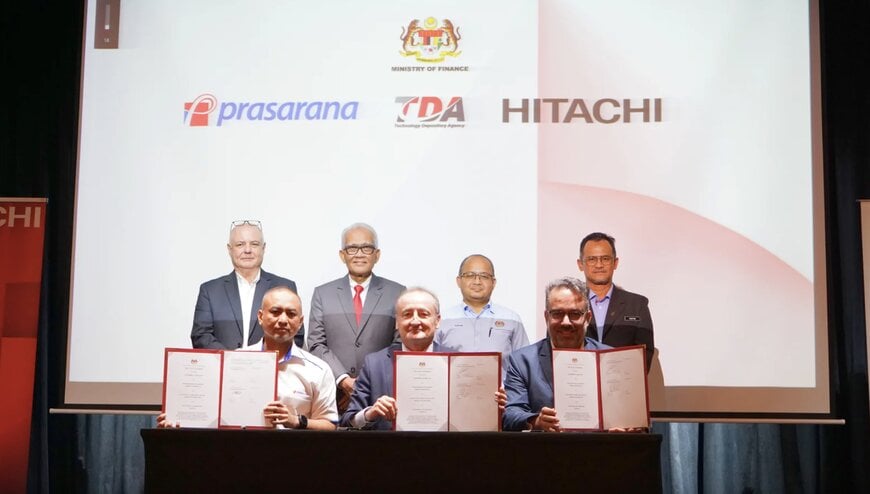
Hitachi Rail has signed a First Tier Industrial Collaboration Programme (ICP) Agreement with Prasarana to support Malaysia’s ICP policy through technology transfer, local capability development, and expanded signalling expertise.
ICP framework and programme objectives
The First Tier ICP Agreement formalises Hitachi Rail’s role in supporting Malaysia’s Industrial Collaboration Programme policy, which aims to strengthen domestic capabilities through structured knowledge transfer and localisation. Under the agreement, Hitachi Rail and Prasarana will implement initiatives designed to develop local technical expertise in advanced rail signalling and operations.
The programme focuses on long-term capability building rather than asset supply, aligning with Malaysia’s objective to increase self-reliance in critical rail technologies and lifecycle support.
Long-standing involvement in Malaysia’s rail network
Hitachi Rail has been active in Malaysia’s rail sector since 1998. The company introduced its SelTrac™ Communications-Based Train Control (CBTC) system on the Kelana Jaya LRT line, enabling high-capacity, automated operations. Subsequent projects included signalling upgrades for the monorail, Ampang, and Kelana Jaya lines.
More recent milestones include commissioning an Integrated Control Center that manages three major urban rail lines and implementing advanced safety system enhancements on the Ampang Line. These projects have contributed to higher operational reliability, improved safety performance, and more centralised network management.
Capability development and localisation initiatives
Key initiatives under the ICP Agreement include structured knowledge transfer in data analytics relevant to rail operations and maintenance. Attachment programmes will place local engineers alongside CBTC system specialists and technical experts, providing hands-on exposure to signalling design, testing, and lifecycle support.
The agreement also предусматривает the development of a Signalling Testing Simulation Centre. Such a facility is intended to support validation, training, and troubleshooting of signalling systems in a controlled environment, reducing dependence on overseas testing resources.
Localisation initiatives with Malaysian companies form another pillar of the programme, supporting the development of domestic supply chains and technical services aligned with international signalling standards.
Rail Center of Excellence and skills development
Hitachi Rail’s Rail Center of Excellence in Batu Gajah has played a central role in skills development and technical training. Combined with the Kelana Jaya Line upgrade project, it has supported the transfer of signalling knowledge and operational best practices to local engineers and technicians.
The ICP Agreement builds on this foundation by extending structured training and collaboration mechanisms, reinforcing Malaysia’s ability to operate, maintain, and evolve advanced rail signalling systems over the long term.
Implications for Malaysia’s rail sector
By combining CBTC expertise, simulation-based testing, and data-driven operational knowledge, the ICP programme is positioned to strengthen Malaysia’s rail signalling capabilities across design, operations, and maintenance. For Prasarana, the agreement supports greater technical autonomy and resilience in managing complex urban rail networks.
www.hitachirail.com
