
www.industry-asia-pacific.com
27
'26
Written on Modified on
Enhancing Reliability in Industrial Cooling Applications
Jacopo Gistri, Segment Leader, Power Generation at Rossi, discusses how the GCS range addresses thermal management, reliability, maintenance and efficiency challenges in wet cooling towers and air-cooled condensers.
www.rossi.com
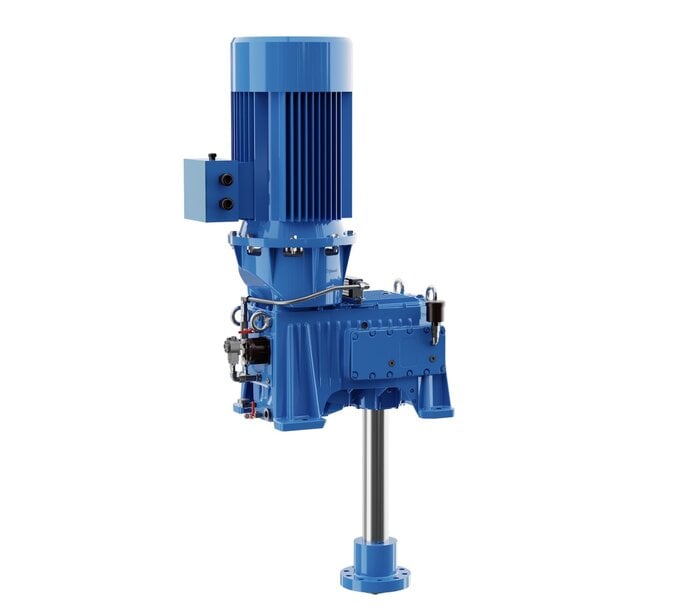
Industrial cooling systems require reliable, high-performance components to ensure continuous operation, particularly in demanding environments and critical infrastructure. Designed specifically for these applications, Rossi’s GCS gearbox series combines optimized thermal management, robust mechanical design and advanced lubrication solutions to enhance reliability and simplify maintenance. In this interview, Jacopo Gistri, Segment Leader Power Generation at Rossi, discusses the range’s key features, application-specific configurations and how it addresses the evolving demands of industrial cooling systems.
1. Cooling systems often operate continuously in demanding conditions. What are the main challenges with conventional gearboxes, and how does the GCS series address them?
Industrial cooling systems frequently operate around the clock, often in environments with high ambient temperatures, humidity, airborne contaminants and limited access for maintenance. In these conditions, a conventional gearbox can be exposed to overheating, lubricant deterioration, vibration, corrosion and premature bearing or seal wear. As the cooling fan is a critical part of the process, even a relatively small gearbox issue can affect the availability of the entire cooling system.
The Rossi GCS Series was developed specifically for these operating conditions rather than being adapted from a general-purpose industrial gearbox. The range combines robust mechanical design, optimized lubrication and thermal management, reduced noise levels and dedicated mounting arrangements for industrial cooling fans.
The bevel-helical GCS version is designed for wet cooling towers and W-style air-cooled condensers, while the helical version is designed for A-style air-cooled condensers. Depending on the configuration, key features include integrated mounting feet, an integrated fan or agitator support, optimized cooling fans and fan covers, high-performance painting systems and condition-monitoring accessories. Together, these features help customers improve equipment reliability and reduce the risk of unplanned interruption in continuous-duty applications.
2. The GCS range offers different gearbox configurations for wet cooling towers and air-cooled condensers. How do customers choose the right solution for their application?
The selection begins with the cooling-system architecture. For wet cooling towers and W-style air-cooled condensers, Rossi offers the bevel-helical GCS range. It is available in four sizes, 250, 283, 321 and 360. Three thermal configurations are available: without a cooling fan, with an axial fan or with a radial fan.
For A-style air-cooled condensers, the helical GCS configuration is normally selected. This version is also available in four sizes: 250, 280, 320 and 360. After identifying the application type, the correct unit is selected according to the installed motor power, required fan speed, transmission ratio, output torque, axial load, ambient temperature and expected operating profile.
The GCS bevel-helical range provides ratios of approximately 10 to 20, with closely spaced alternatives that allow the fan speed to be matched accurately to the thermal design of the cooling system, without the need of a special ratio. The need for an axial fan, radial fan or natural cooling is determined by the gearbox’s thermal balance and the available airflow around the unit.
Environmental requirements are also considered, including corrosion category, lubricant viscosity, monitoring devices and low-temperature operation. This application-based selection ensures that the gearbox is not only mechanically adequate but also thermally suitable for the real installation.
3. Overheating can affect gearbox performance and service life. What design features help the GCS series manage heat more effectively?
Thermal management was one of the main priorities in the development of the GCS range. In the bevel-helical version, the cooling fan and fan cover have been redesigned to improve the airflow around the casing. The casing itself has also been optimized to support more effective heat dissipation while maintaining structural rigidity.
Customers can choose between natural cooling, an axial fan or a radial fan, depending on input speed, transmission ratio, ambient conditions and the airflow available around the gearbox. The integrated fan support simplifies the arrangement and helps ensure that the cooling system is correctly positioned in relation to the gearbox.
The A-style ACC version uses a patented double-oil-chamber and lubrication concept. This reduces the amount of oil required while keeping the relevant bearings continuously lubricated. The design also improves the gearbox’s thermal capacity and heat dissipation.
For demanding projects, oil and bearing temperature sensors can also be added. These monitoring devices give the plant control system an early indication of abnormal operating conditions, allowing maintenance teams to intervene before excessive temperature develops into damage or an unplanned shutdown.
4. Unplanned downtime can be costly for industrial cooling systems. How does the GCS series improve reliability and reduce maintenance requirements?
Reliability starts with selecting a gearbox specifically designed for the load profile of a cooling fan. The GCS range is designed in accordance with relevant Cooling Technology Institute requirements. The A-style ACC configuration provides an AGMA service factor greater than 2 according to CTI 167, while its calculated bearing life exceeds 100,000 operating hours. The lubrication systems are designed to provide oil continuously to critical bearings.
In the bevel-helical version, supplementary lubrication can be provided through dedicated internal passages and an internal piston pump. In the helical version, the patented lubrication circuit keeps the bearings constantly oil-bathed while reducing the overall oil quantity by almost 60%.
The GCS design also supports condition monitoring through options such as oil-temperature sensors, bearing-temperature sensors, oil-level devices and vibration-sensor provisions. These devices help operators move from purely time-based maintenance to condition-based maintenance, identifying changes in temperature, oil level or vibration before they result in a failure.
Maintenance is further simplified by the integrated fan support, accessible oil filling and draining points, magnetic drain plugs and a casing design that minimizes unnecessary recesses where water or contaminants could collect and trigger corrosion process. This is especially important in wet cooling towers and outdoor installations.
5. Cooling systems operate in different climates and temperatures. How does the GCS series handle extreme conditions, including cold starts at temperatures as low as minus 15 degree Celsius?
The final configuration is selected according to ambient temperature, operating oil temperature, input speed, load and the required lubricant viscosity.
For particularly hot environments, the GCS can be equipped with an axial or radial cooling fan, while the optimized housing and airflow design increase the gearbox’s ability to dissipate heat. High-performance painting cycles can also be specified for humid, saline or highly corrosive environments.
For low-temperature applications, it is important to distinguish between the two GCS designs.
The helical version developed for A-style air-cooled condensers uses a patented double-oil-chamber and lubrication system that allows reliable cold starts down to-15 °C without external oil heaters. The design limits the amount of oil that must initially be moved and ensures that critical bearings remain properly lubricated during start-up.
The bevel-helical version for wet cooling towers and W-style condensers must be assessed according to the specific operating conditions. In low-temperature installations, the solution may require a suitable low-temperature lubricant, an oil heater or a dedicated project configuration.
For this reason, ambient-temperature limits and cold-start requirements are checked during the application-engineering phase rather than applying a single solution to every cooling-system design.
6. How does the GCS series address common installation challenges, vibration and noise in industrial cooling applications?
Cooling-tower gearboxes are often installed in confined spaces, at height and directly on steel structures. This makes alignment, structural stiffness and accessibility particularly important.
The bevel-helical GCS has integrated feet and fan support into gearbox casing. This creates a strong and stable interface with the customer’s structure, simplifies installation and reduces the number of separate supporting components. The rigid mounting arrangement also helps limit vibration caused by flexibility or movement at the gearbox-to-structure interface.
Noise reduction is addressed through the gearbox design (extremely high-level ground gears) and through the optimized cooling fan and fan cover. The fan-cover geometry improves airflow while limiting the additional noise generated by the gearbox’s own cooling system. This is increasingly important for installations near residential areas and for data-centre projects, where strict environmental-noise limits may apply.
Where required, the gearbox can include provisions for vibration sensors, and project-specific testing can measure oil and casing temperature, vibration, sound-pressure level and sound-power level. This allows customers to verify gearbox behaviour against project requirements before installation.
7. Demand for cooling infrastructure is growing across industries, especially data centres. What new requirements are you seeing from customers, and how is Rossi responding to them?
Customers are increasingly asking for larger cooling capacities, continuous operation, short project schedules and higher levels of equipment monitoring.
Data centres add further requirements because cooling-system availability directly supports the operation of servers and other critical digital infrastructure.
Customers are therefore placing greater emphasis on redundancy, predictable maintenance, low noise, remote monitoring and fast replacement or service support. Projects are also becoming extremely large: these quantities illustrate the scale and standardization increasingly required in new cooling infrastructure.
Rossi is responding with a dedicated and standardized product platform rather than project-by-project adaptations of a general-purpose gearbox.
The four gearbox sizes, closely spaced ratios and multiple cooling arrangements make it possible to cover a wide range of wet cooling tower and ACC requirements while maintaining a consistent mechanical interface.
Local assembly and global service capabilities are considered as well for major projects where delivery schedule, localization and long-term support are critical.
8. What measurable benefits can customers expect from the GCS series in terms of energy efficiency, maintenance costs and equipment lifespan?
The measurable benefits begin with the mechanical performance of the range. The bevel-helical GCS is available in four sizes with nominal output torque up to 23,600 Nm, while the helical range for A-style ACC applications reaches up to 37,500 Nm. The products are designed around demanding cooling-system duty cycles rather than general industrial service.
For the A-style ACC configuration, the gearbox provides an AGMA service factor greater than 2 according to CTI 167 and a calculated bearing life exceeding 100,000 hours. These values provide customers with a clear technical basis for assessing reliability and expected operating life.
Energy efficiency depends on the complete fan drive, not only on the gearbox. However, the availability of closely spaced transmission ratios helps customers match the actual fan speed more accurately to the cooling duty, as well as high-level ground gears to push gearbox efficiency to the physical limit.
Avoiding excessive fan speed can reduce unnecessary power consumption, because the power required by a fan rises significantly as its rotational speed increases.
Maintenance savings come from the integrated lubrication solutions, continuously lubricated critical bearings, reduced oil quantity in the A-style configuration and the availability of condition-monitoring accessories.
These features extend maintenance intervals, simplify inspections and reduce the risk of changing components or lubricant prematurely. The final economic benefit will always depend on operating hours, electricity price, maintenance strategy and the cost of downtime at the individual plant.
For this reason, Rossi normally evaluates total cost of ownership at project level. The most significant benefit is often not a small difference in gearbox efficiency, but the combination of optimized fan operation, fewer maintenance interventions and greater protection against an unplanned cooling-system shutdown.

Jacopo Gistri, Segment Leader Power Generation at Rossi
Edited by Induportals Editor, Romila DSilva.
