
www.industry-asia-pacific.com
28
'26
Written on Modified on
Manitowoc showcases complete lifting solutions at bauma CHINA 2026
The Company will announce a major new high-capacity Potain luffing jib crane and provide early detail on a large flat-top crane to be announced in 2027.
www.manitowoc.com
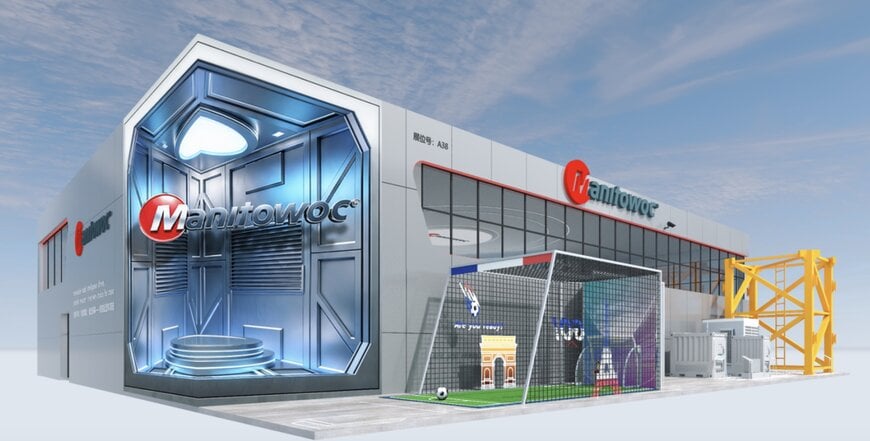
bauma CHINA 2026 takes place from November 24 to 27, 2026, at the Shanghai New International Expo Centre in Shanghai, China, presenting construction machinery, building material equipment, and mining vehicles. At Booth A.38, The Manitowoc Company, Inc. showcases tower crane technologies, structural mast components, and intelligent jobsite systems engineered for commercial infrastructure construction.
Core Technology and System Architecture
The technical presentation centers on modular lifting architectures and digital operator controls. Structural updates include the Potain K1000A heavy-duty mast, which provides a compact 3.45-meter by 3.45-meter profile designed for the Potain MCT 2205 and upcoming high-capacity tower crane assemblies as an alternative to standard 4-meter by 4-meter sections. The digital infrastructure incorporates the Ergo Control System (ECS), which integrates real-time machine telemetry with anti-collision sensor networks, operational cameras, and remote condition monitoring to stabilize load handling. Power management is coordinated through Potain Power Solutions, regulating energy distribution to optimize electrical consumption across variable duty cycles.
Deployment or Implementation
The crane equipment and control systems deploy directly across constrained urban build sites and major civil engineering projects. Modular mechanical connections allow the K1000A mast sections to integrate into existing Potain crane bases, reducing transport volume and assembly staging footprints. Digital monitoring platforms and anti-collision hardware interface with jobsite networks to synchronize multi-crane working envelopes, supported by regional dealer networks that coordinate on-site erection, parts availability, and technical service.
Industry Applications
The systems serve civil construction contractors, equipment rental fleets, and high-density urban developers operating in confined airspaces. Tower crane operations on congested construction sites face operational risks from overlapping working radii, structural footprint restrictions, and power supply variations. Deploying compact heavy-duty masts alongside integrated anti-collision and camera systems enables contractors to install high-capacity lifting assets within restricted footprints without compromising crane reach or operational safety.
Operational Impact and Performance Metrics
Reducing tower mast dimensions to 3.45 meters decreases logistical transport demands and eases base foundation requirements while maintaining structural load-bearing capacity. Sensor-driven anti-collision controls and centralized operator interfaces stabilize cycle times by mitigating blind-spot risks and reducing manual positioning corrections. Combining variable power management with predictive aftermarket monitoring maximizes crane availability, limits site energy draws, and extends overall equipment service life across continuous lifting schedules.
Edited by Romila DSilva, Induportals Editor, with AI assistance.
www.manitowoc.com
