
www.industry-asia-pacific.com
12
'26
Written on Modified on
Low-Voltage Power Distribution for Automated Logistics Infrastructure
CHINT deploys low-voltage switchgear and high-fault protection hardware at the SPX Express Sorting Center in Vietnam.
www.chintglobal.com
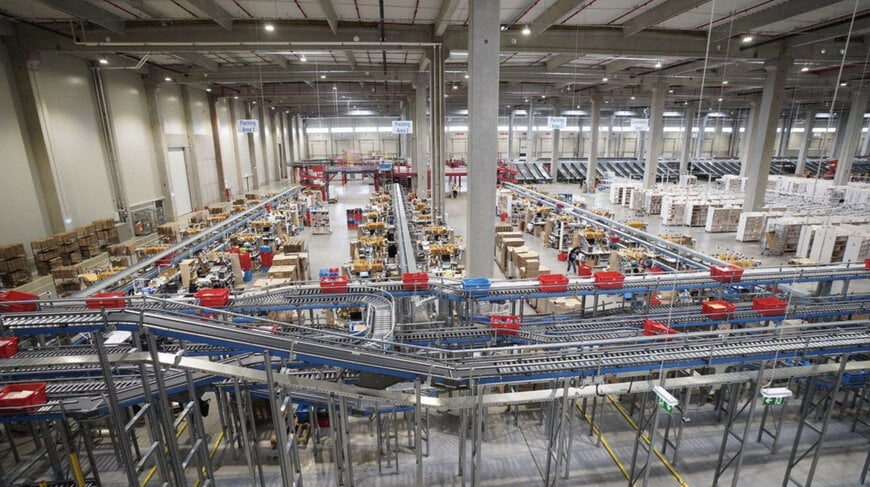
High-throughput logistics hubs require uninterrupted electrical distribution systems capable of sustaining continuous electromechanical loads without cascading failure. To support these continuous operational demands, CHINT implemented a comprehensive low-voltage power distribution architecture for the SPX Express Sorting Center in Hung Yen, Vietnam, integrating high-capacity circuit protection from primary utility and generator inputs down to automated sorting line drives.
Electrical Infrastructure Requirements in Automated Distribution Hubs
Automated regional logistics terminals rely heavily on extensive networks of dynamic electrical loads, including three-phase variable-speed induction motors, high-speed diverters, optical scanning tunnels, and complex material-handling conveyors. These loads create demanding electrical operating profiles characterized by cyclic inrush currents, harmonic distortions from power electronics, and inductive reactive power demands.
In such mission-critical logistics facilities, unscheduled electrical interruptions result in immediate operational bottlenecks that disrupt broad logistics networks. Designing the power distribution network requires robust protection coordination capable of isolating local faults without taking entire distribution switchboards offline. Furthermore, incoming supply feeds connected to utility transformers and standby emergency generators expose the facility to severe short-circuit stresses, necessitating switchgear architectures with high breaking capacities to protect upstream equipment and ensure personnel safety.
System Architecture and Short-Circuit Protection Engineering
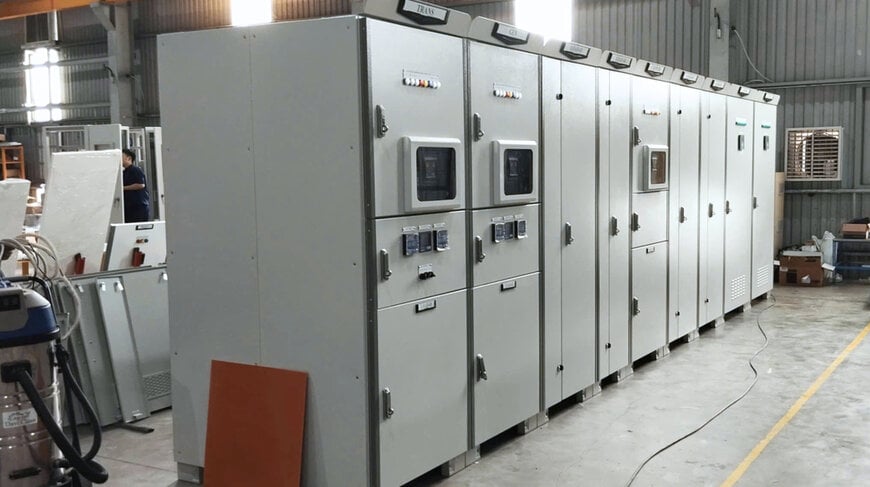
To establish a resilient power backbone across the facility, CHINT supplied an integrated suite of low-voltage components configured according to International Electrotechnical Commission (IEC) standards. The electrical hierarchy spans the initial step-down transformer interfaces, emergency diesel generator synchronizing links, main low-voltage switchboards (MLVS), motor control centers (MCC), and localized final distribution boards.
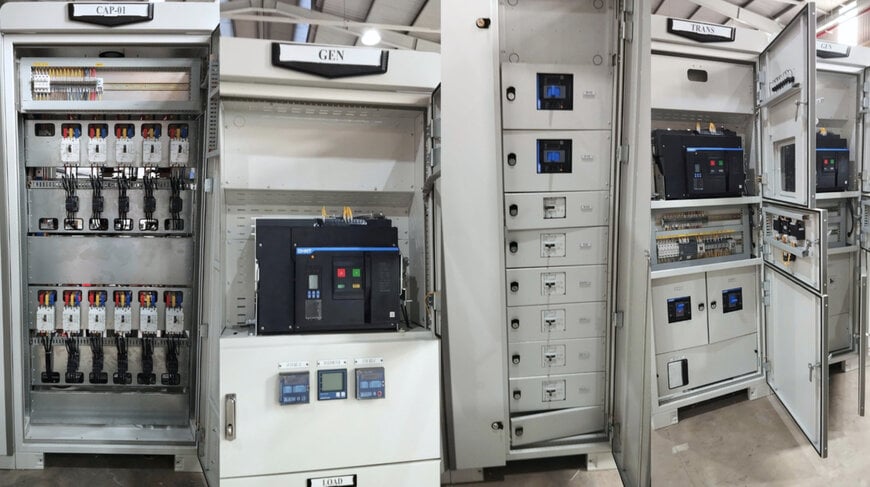
At the main distribution level, CHINT integrated air circuit breakers (ACBs) to serve as primary incomers and bus couplers. These units provide the high prospective short-circuit breaking capacity demanded by the hub, rated to interrupt fault currents up to 100 kA. The electronic trip units embedded within the ACBs feature adjustable long-time, short-time, instantaneous, and ground-fault protection parameters, enabling precise time-current discrimination with upstream medium-voltage protection and downstream feeders.
Downstream branch circuits feeding parcel sorting machinery, automated storage zones, and mechanical conveying belts are protected using molded case circuit breakers (MCCBs) and miniature circuit breakers (MCBs). The MCCBs feature current-limiting mechanisms that rapidly separate contacts and extinguish electric arcs within deionizing arc chutes during high-current fault events, limiting let-through energy (I²t) and protecting sensitive automation controllers from thermal and mechanical stress.
Power Quality Management and Reactive Power Compensation
Beyond fault isolation, large numbers of induction motors operating across parcel induct systems and cross-belt sorters introduce significant inductive reactive power, degrading the operational power factor of the internal grid. Operating at low power factor values causes parasitic line losses, increases voltage drops across distribution cables, and incurs utility reactive power penalties.
To mitigate these losses, the installed infrastructure integrates automated low-voltage capacitor banks alongside dedicated motor control centers. These capacitor stages utilize microprocessor-based power factor controllers to measure reactive current vectors in real time, stepping capacitor steps in and out to maintain system power factor close to unity. This reactive compensation stabilizes the internal voltage profile, reduces total apparent power demand, and lowers thermal loading across transformers and distribution conductors, contributing to improved operational efficiency.
Supply Chain Execution and Engineering Coordination
Executing an automated logistics installation of this magnitude required compressed construction and electrical commissioning schedules. Equipment delivery, switchboard assembly, and field testing had to synchronize directly with the mechanical installation of the sorting conveyors.
CHINT structured a localized engineering and supply delivery workflow in Vietnam, collaborating with engineering contractor SOL E&C and local panel builders, including SEAE. This engineering cooperation ensured that custom-assembled low-voltage motor control centers and distribution boards complied with site-specific dimensional constraints, cable entry profiles, and operational interlocks, allowing the electrical backbone to be energized on schedule.
Additional Context:
This section details technical specifications and competitive benchmarking not included in the original product announcement.
The power distribution hardware deployed at the Hung Yen sorting center complies with international standards defined under the IEC 60947 series for low-voltage switchgear and controlgear. In primary distribution boards, the incoming air circuit breakers (conforming to IEC 60947-2) deliver a rated ultimate short-circuit breaking capacity (Icu) and rated service short-circuit breaking capacity (Ics) of up to 100 kA at 400/415 V AC. Achieving equal Ics and Icu values ensures that the circuit breaker remains fully functional without derating even after clearing a maximum-rated short-circuit fault.
In industrial automation and e-commerce logistics centers, power architectures typically compete with solutions from international manufacturers such as Schneider Electric (MasterPact and ComPact series), ABB (Emax 2 and Tmax XT series), and Siemens (Sentron series). These benchmark systems emphasize Category B selectivity under IEC 60947-2, which provides short-time withstand current (Icw) ratings for deliberate time delays of up to one second, preventing upstream tripping during downstream transient faults.
Furthermore, modern sorting center power architectures are designed to comply with IEC 61439-1 and IEC 61439-2 standards governing low-voltage switchgear assemblies. These standards require verified internal separation forms (typically Form 3b or Form 4b), which isolate busbars, functional units, and external terminals into dedicated compartments. This physical segregation prevents accidental contact during maintenance, contains internal arcing events, and enables service personnel to inspect individual motor feeder circuits without de-energizing adjacent automated lines.
Edited by Natania Lyngdoh, Induportals editor, with AI assistance.
www.chintglobal.com
