
www.industry-asia-pacific.com
16
'26
Written on Modified on
Optimizing Vessel Construction via Digital Twins and Physical Artificial Intelligence
Kawasaki Heavy Industries leverages advanced robotics and digital infrastructure simulation platforms from NVIDIA to construct a digital twin architecture at the Sakaide Works.
www.kawasakirobotics.com
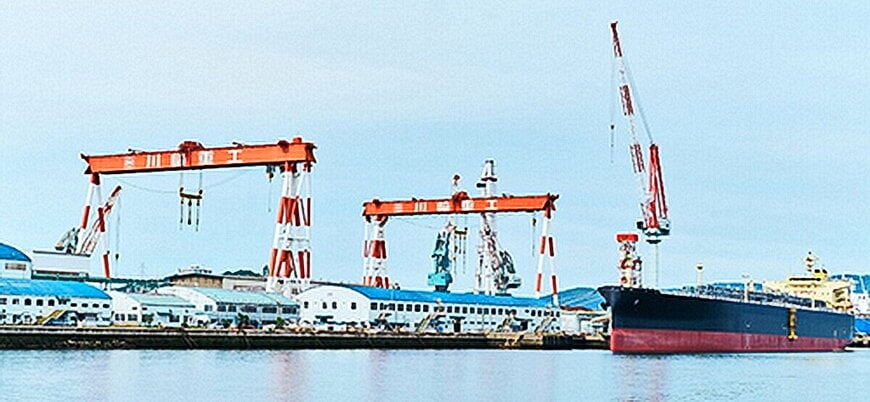
Kawasaki Heavy Industries, Ltd. has initiated a technical collaboration with NVIDIA Corporation to develop and deploy a next-generation digital twin and physical artificial intelligence framework for commercial shipbuilding. This collaborative system aims to integrate the entire lifecycle of commercial vessels, from structural design to fabrication and assembly, into a unified digital workflow.
Industrial Challenges in Modern Shipbuilding
Shipyards face tightening labor constraints alongside rising demand for complex, low-carbon vessels. Traditional shipbuilding involves highly manual fabrication processes, such as welding, painting, and structural inspections, which are susceptible to variance. To stabilize production volumes and improve process efficiency, the industry requires digital infrastructure capable of simulating assembly workflows and deploying automated systems directly onto the shipyard floor.
System Architecture and Technical Integration
The partnership combines the manufacturing data and robotics technology of Kawasaki with the physical artificial intelligence software stack from NVIDIA. The platform utilizes a suite of specialized software interfaces:
- Simulation and Visualization: Digital twins of the Sakaide Works are constructed using software that mirrors the physical dynamics of the yard. This allows engineers to run virtual assembly simulations, minimizing the risk of dimensional errors or layout conflicts before physical steel fabrication begins.
- Robotic Path Planning and Controls: Automated welding, painting, and inspection robots leverage motion-planning and path-generation tools to adapt to real-time structural variations on the shop floor.
- On-Site Data Feedback: Sensor data from active shipyard operations feeds back into the virtual model. Machine learning models analyze this data to optimize robot operating parameters and assess weld quality and coating thickness.
- Agentic Workflows: Autonomous software agents assist with complex data logistics across procurement, design modification, and quality assurance, speeding up decision-making.
Phased Deployment and Lifecycle Applications
Initial deployment and physical verification of the integrated systems are focused at the Kawasaki Sakaide Works. This site serves as the testing ground to refine robotic manipulation and validate the digital twin models against actual construction tolerances.
The long-term engineering goal extends beyond the shipyard boundaries. By establishing a digital thread during fabrication, the resulting dataset forms a foundational model for the vessel's operational life. Operational, maintenance, and refit data captured during the vessel's active service will be mapped back to the digital twin, allowing operators to plan preventative maintenance and streamline structural overhauls.
Edited by Evgeny Churilov, Induportals Media - Adapted by AI.
www.global.kawasaki.com
Initial deployment and physical verification of the integrated systems are focused at the Kawasaki Sakaide Works. This site serves as the testing ground to refine robotic manipulation and validate the digital twin models against actual construction tolerances.
The long-term engineering goal extends beyond the shipyard boundaries. By establishing a digital thread during fabrication, the resulting dataset forms a foundational model for the vessel's operational life. Operational, maintenance, and refit data captured during the vessel's active service will be mapped back to the digital twin, allowing operators to plan preventative maintenance and streamline structural overhauls.
Edited by Evgeny Churilov, Induportals Media - Adapted by AI.
www.global.kawasaki.com
