
www.industry-asia-pacific.com
06
'26
Written on Modified on
Royal Government of Bhutan & World Bank Finance Dorjilung Hydropower Development
The hydropower project, implemented through a Druk Green Power Corporation–Tata Power joint venture, expands renewable energy generation and regional electricity trade.
www.tatapower.com
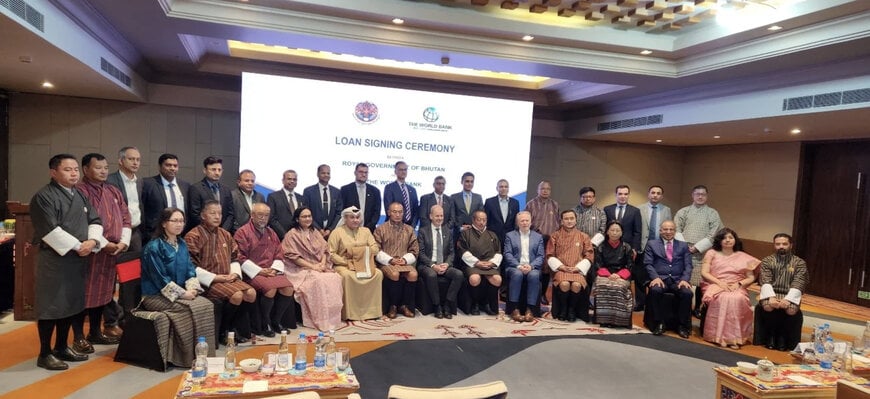
The Royal Government of Bhutan and the World Bank have signed financing agreements totaling $515 million for the 1,125 MW Dorjilung Hydroelectric Power Project on the Kurichhu River in eastern Bhutan. The project will be implemented by Dorjilung Hydro Power Limited (DHPL), a special purpose vehicle jointly owned by Druk Green Power Corporation (60%) and Tata Power (40%).
Designed to generate more than 4,500 GWh of electricity annually, the hydropower facility will strengthen Bhutan’s electricity generation capacity, reduce seasonal energy shortages, and support cross-border clean energy exports to India.
Public-Private Financing Structure
The Dorjilung project is structured as a public-private partnership intended to minimize sovereign borrowing while attracting large-scale infrastructure investment into Bhutan’s energy sector.
The financing package includes $300 million from the International Development Association (IDA), including a $150 million grant, alongside $215 million from the International Bank for Reconstruction and Development (IBRD). The International Finance Corporation (IFC) has also committed up to $300 million in financing support.
According to the project framework, the structure is expected to mobilize an additional $900 million in private sector financing toward the estimated $1.7 billion project cost.
The financing model allows Bhutan to limit direct sovereign credit exposure while maintaining long-term participation in project revenues through taxes, equity dividends, and electricity generation benefits.
Hydropower Infrastructure and Energy Integration
The facility is expected to account for approximately one-third of Bhutan’s total electricity generation capacity. The project is designed to address Bhutan’s seasonal electricity imbalance, where winter generation shortages require energy imports while summer hydropower production creates exportable surplus electricity.
Approximately 80% of annual electricity generation is expected to be exported to India, supporting regional electricity demand and cross-border clean energy trade.
The hydropower infrastructure is also intended to improve grid flexibility and support stable renewable electricity supply across interconnected regional power systems.
Implementation and Operational Strategy
Project implementation will be coordinated through DHPL, combining Druk Green Power Corporation’s experience in Bhutan’s hydropower sector with Tata Power’s expertise in large-scale energy infrastructure and regional electricity markets.
The development forms part of Bhutan’s long-term energy expansion strategy under the country’s 13th Five-Year Plan. The project is also intended to support industrial growth by improving electricity reliability for manufacturing, tourism, and small business operations.
In addition to direct construction and operational employment, the project is expected to generate long-term economic returns through electricity exports and associated infrastructure activity.
Regional and Environmental Impact
According to project estimates, the Dorjilung Hydroelectric Power Project could increase Bhutan’s GDP by approximately 2.4% while displacing around 3.3 million tonnes of CO2 annually through the replacement of higher-emission electricity generation sources.
The project reflects growing investment in regional renewable energy infrastructure within South Asia, particularly hydropower systems connected to cross-border electricity transmission and energy security initiatives.
Edited by Natania Lyngdoh, Induportals Editor, with AI assistance.
www.tatapower.com
