
www.industry-asia-pacific.com
27
'26
Written on Modified on
Integrated Chemical Site Advances Low-Emission Production
BASF commissions a large-scale Verbund site in Zhanjiang, China, combining integrated production, renewable energy use and flexible feedstock processing for multiple chemical value chains.
www.basf.com
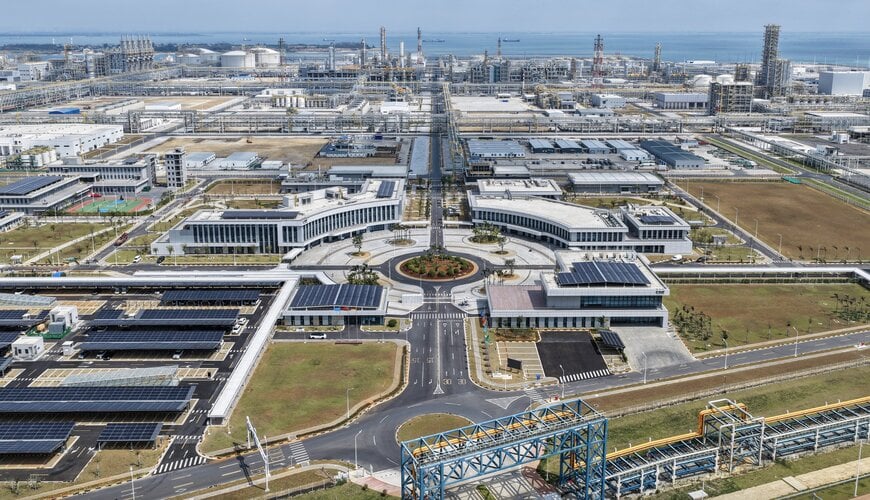
BASF has inaugurated a world-scale integrated chemical production site in Zhanjiang, Guangdong Province, designed to support diversified chemical manufacturing with reduced emissions and localized supply. The facility combines multiple production plants within a single interconnected system, enabling efficient material and energy use across value chains.
Verbund integration and industrial-scale production
The site is based on BASF’s Verbund concept, which integrates production processes so that by-products and energy streams from one unit are used as inputs for others. This approach improves resource efficiency and reduces waste compared to standalone production facilities.
Covering approximately four square kilometers and employing more than 2,000 personnel, the site produces a broad portfolio of chemicals, intermediates, and specialty products. These materials serve industries including transportation, electronics, consumer goods, and personal care.
The facility includes 18 plants and 32 production lines, manufacturing over 70 products across multiple chemical value chains. This scale and integration support cost efficiency and supply reliability for regional customers.
Steam cracker as core of value chains
At the center of the site is a flex-feed steam cracker with an annual capacity of 1 million tons of ethylene. The unit can process multiple feedstocks, including naphtha and butane, enabling operational flexibility depending on market conditions and raw material availability.
The steam cracker functions as the starting point for downstream chemical production, supplying key intermediates used across the integrated site. Its design supports high-throughput production while maintaining consistent material quality for subsequent processing steps.
Renewable energy and emissions reduction
The site incorporates renewable energy sourcing and process innovations to reduce carbon emissions. Electricity supply is based on long-term green power purchase agreements and investments in offshore wind energy, enabling full reliance on renewable electricity.
In addition, the steam cracker is equipped with electrically driven main compressors powered by renewable energy. This configuration contributes to lower operational emissions compared to conventional systems using fossil-based energy sources.
Through the combination of Verbund integration, electrification, and renewable energy use, the site can reduce CO₂ emissions by up to 50% relative to conventional petrochemical complexes of similar scale.
Localization and supply chain resilience
The majority of the site’s production is intended for customers within China, aligning with a localized manufacturing approach. Proximity to end users reduces transportation requirements and supports faster response to market demand.
The integrated structure also enhances supply chain resilience by consolidating multiple production steps within a single site. This reduces dependency on external suppliers and improves continuity in high-volume chemical production.
Position within global chemical production network
The Zhanjiang facility represents BASF’s seventh Verbund site globally and ranks among its largest production hubs. It complements existing sites in Europe and strengthens the company’s presence in the Asia-Pacific region.
By combining large-scale integration, flexible feedstock processing, and renewable energy utilization, the site reflects current trends in chemical manufacturing toward efficiency, emissions reduction, and regionalized supply chains.
Edited by Romila DSilva, Induportals Editor, with AI assistance.
www.basf.com
