
www.industry-asia-pacific.com
25
'26
Written on Modified on
Utility-Scale Back Contact Solar Modules Deployed in Kazakhstan
LONGi supplied Hi-MO 9 modules featuring HPBC 2.0 back contact cell technology for the 100MW Damona solar project in southern Kazakhstan.
www.longi.com
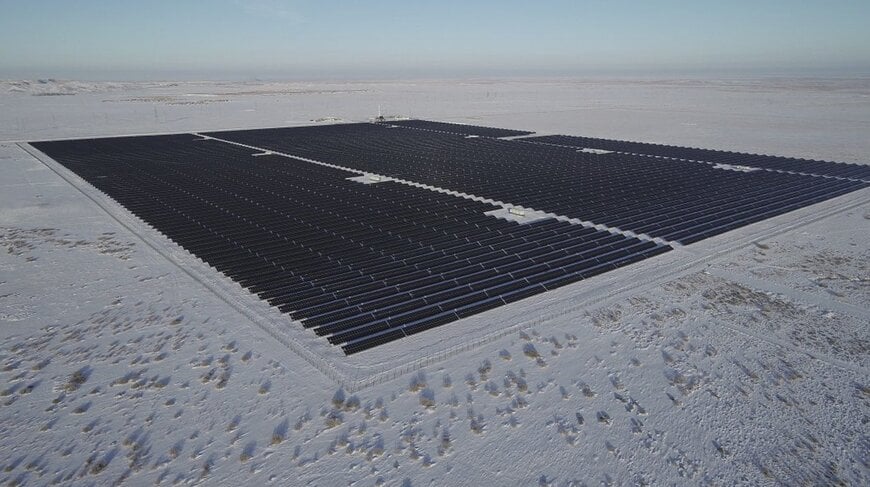
Utility-scale solar installations in arid, continental climates face severe performance degradation driven by abrasive sandstorms, high wind loads, and wide diurnal temperature swings. Maintaining high energy yields while controlling Balance of System (BOS) expenses requires photovoltaic modules engineered for mechanical durability, low temperature coefficients, and high power density. LONGi has completed full module delivery for the 100MW Damona ground-mounted solar power plant in Kazakhstan, establishing Central Asia’s first 100MW-class utility-scale deployment utilizing Back Contact (BC) cell architecture.
Project Scope and Deployment Environment
Situated across 210 hectares in the Keles District of southern Kazakhstan’s Turkistan Region, approximately 150 kilometers from Shymkent, the Damona facility is being developed and financed by Damona LLP, a subsidiary of Sun System Group. Commercial operation is scheduled for January 2027.
Once grid-connected, the installation will supply clean electricity to southern Kazakhstan's power network, supporting the country’s broader grid decarbonization strategy and its national target of achieving carbon neutrality by 2060. The 100MW project follows LONGi’s earlier deployment of a 20MW solar installation in Kazakhstan’s Zhetysu Region in early 2026, scaling the deployment of high-efficiency utility-scale solar infrastructure across the region.
Technical Architecture and BOS Optimization
The Damona plant is equipped exclusively with LONGi Hi-MO 9 modules built on Hybrid Passivated Back Contact (HPBC) 2.0 cell technology. Unlike conventional front-contact solar cells, BC architecture relocates all electrical gridlines and contacts to the rear surface of the silicon wafer. This grid-free front design eliminates front-side shading losses, increases active light-absorbing surface area, and enhances conversion efficiency.
For utility-scale ground-mounted applications, higher module power output and conversion efficiency directly reduce BOS costs per watt installed by lowering structural mounting, cabling, and land-area requirements. Engineering evaluations conducted prior to procurement indicated that the Hi-MO 9 modules provide an optimized temperature coefficient, lower annual degradation rates, and improved low-light response—critical parameters for maintaining stable energy yields amid the severe temperature fluctuations and dust-laden conditions of southern Kazakhstan.
Regional Scaling of Back Contact Photovoltaics
Historically, large-scale ground-mounted photovoltaic projects across Central Asia have relied predominantly on standard passivated emitter and rear cell (PERC) or tunnel oxide passivated contact (TOPCon) topologies. Moving BC technology from distributed commercial rooftops into a 100MW ground-mounted utility environment demonstrates supply chain maturity and bankability for high-density cell architectures in harsh continental geographies.
Edited by Romila DSilva, Induportals Editor, with AI assistance.
www.longi.com
