
www.industry-asia-pacific.com
24
'26
Written on Modified on
Digital Twin Process Optimization for Green Hydrogen Production
Siemens, Mescada, and InterContinental Energy deploy gPROMS and COMOS digital twin engineering software to standardize gigawatt-scale renewable hydrogen and AI compute nodes.
www.siemens.com
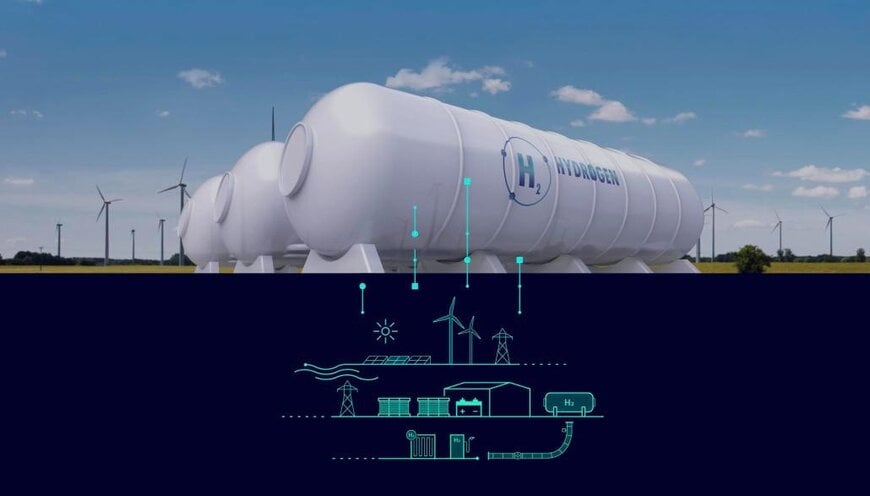
Siemens, Mescada, and InterContinental Energy are collaborating to develop and deploy a process optimization digital twin for large-scale green hydrogen production and renewable-powered artificial intelligence compute infrastructure. The engineering initiative integrates process modeling and plant data management software to standardize gigawatt-scale energy facilities before physical construction begins.
Engineering Complexity in Gigawatt-Scale Hybrid Facilities
Developing multi-gigawatt clean energy infrastructure in remote, non-metropolitan regions introduces severe capital and operational risks. Coupling intermittent wind and solar generation with continuous electrolysis and artificial intelligence computing loads requires dynamic balancing across variable power supply and fluctuating demand profiles. Without rigorous pre-construction verification, equipment mismatches and unoptimized plant configurations can inflate capital expenditures and delay project financing. Establishing a standardized, repeatable engineering template requires simulating thermodynamic behavior, equipment performance, and lifecycle costs prior to front-end engineering design and final investment decisions.
Digital Twin Architecture and Partner Responsibilities
The technical collaboration divides software provisioning, systems integration, and plant engineering across three organizations. Siemens supplies the core industrial software suite, comprising gPROMS for advanced process modeling and COMOS for controlled engineering data management. Solution partner Mescada manages software delivery, customer onboarding, hands-on technical training, and first-line engineering support, backed by Siemens technology escalation. InterContinental Energy integrates these tools into its patented P2(H2)Node architecture, which typically pairs 1 to 1.3 gigawatts of combined electrolysis and artificial intelligence compute capacity with approximately 2.6 gigawatts of renewable generation.
At the system level, gPROMS operates as the dynamic process-modeling engine embedded within InterContinental Energy’s Python-based optimization and data workflow. This enables engineers to simulate transient renewable energy profiles and benchmark equipment configurations from competing suppliers against reliability and cost parameters. Concurrently, COMOS establishes a unified engineering data environment that governs standard node configurations alongside site-specific variants. COMOS manages equipment specifications, technical documentation, and the automated generation of basic engineering deliverables, including process flow diagrams and piping and instrumentation diagrams.
Darryl Kaufmann, Managing Director of Digital Industries at Siemens Australia and New Zealand, explained the engineering rationale: “Energy at this scale can only be built with confidence if projects can be designed, tested and costed digitally before construction starts. ICE is among a growing wave of energy developers that want a digital twin from the earliest feasibility stage, rather than waiting until the build or operations, and gPROMS and COMOS give them a single, trusted source of engineering and cost data to do that.”
Project Funding and Industrial Impact
The 3.12 million dollar initiative is co-funded by the Australian Renewable Energy Agency through its Advancing Renewables Program, which contributes 1.56 million dollars toward development. By establishing a single source of truth linking process simulation with engineering and cost databases, the digital twin workflow accelerates early-stage feasibility validation.
The standardized engineering methodology is projected to reduce green hydrogen production costs by up to 20 percent while creating a licensable plant template for global deployment. Validating repeatable gigawatt-scale designs supports industrial decarbonization across heavy manufacturing, steelmaking, fertilizer synthesis, maritime shipping, and high-density artificial intelligence data centers.
Edited by Romila DSilva, Induportals Editor, with AI assistance.
www.siemens.com
