
www.industry-asia-pacific.com
17
'26
Written on Modified on
Room-Temperature 3D Glass Printing via Sol-Gel Chemistry
SEGULA Technologies patented a liquid-medium drying process enabling room-temperature additive manufacturing of customizable hybrid glass components without high-temperature sintering.
www.segulatechnologies.com
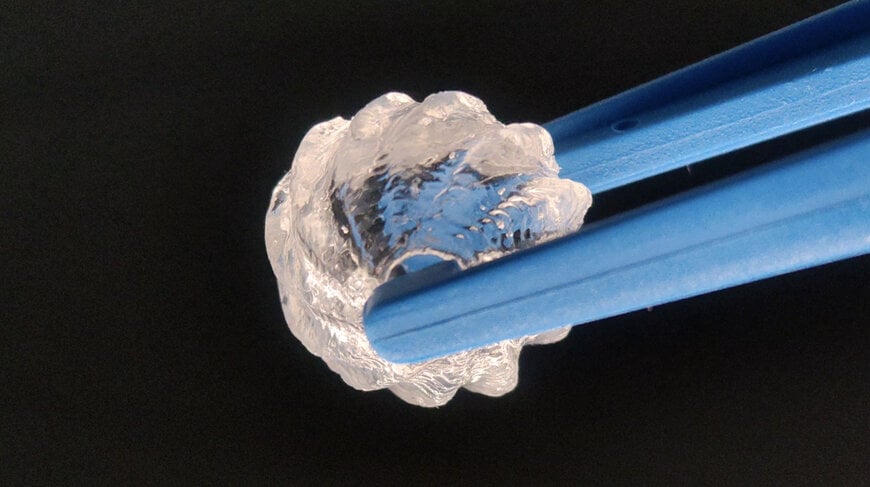
Industrial engineers face significant thermal and geometric constraints when shaping glass and polymer components for high-performance environments. Addressing this manufacturing challenge, the engineering group SEGULA Technologies has developed and patented a room-temperature additive manufacturing process for hybrid glass, enabling the production of complex, customizable parts without melting or high-temperature sintering. Developed in collaboration with the Multimaterials and Interfaces Laboratory (LMI) in France, the technology targets demanding applications across the aerospace, automotive, optics, energy, rail, and biotechnology sectors.
Overcoming Thermal Barriers in Glass Additive Manufacturing
Conventional glass manufacturing and additive manufacturing techniques typically rely on extreme thermal processing. Direct molten glass extrusion requires high-temperature crucibles that yield coarse layer resolutions, while indirect photopolymer resin methods mix silica particles with organic binders that must undergo thermal debinding and sintering above 1,000 °C. These thermal cycles consume substantial energy, induce structural shrinkage, and prevent the direct encapsulation of temperature-sensitive electronics or sensors during fabrication.
SEGULA Technologies and its research partners at LMI on the LyonTech-la Doua campus in Villeurbanne bypassed these thermal bottlenecks using soft chemistry. Filed under French patent FR No. 2505395, the process currently sits at a Technology Readiness Level (TRL) between 3 and 6 depending on the target sector, supported by representative functional prototypes.
How Liquid-Medium Sol-Gel Drying Works
The manufacturing method relies on sol-gel chemistry, a wet-chemical synthesis route that converts liquid silica precursors into a solid three-dimensional network. In traditional sol-gel processing, ambient solvent evaporation generates uneven capillary forces across the material, leading to internal mechanical stresses, warping, and cracking. Furthermore, conventional methods generally require a final high-temperature curing stage to consolidate and harden the silica structure.
To eliminate these defects, the patented approach conducts the drying phase inside a liquid medium. Drying in a liquid environment equalizes pressure and promotes uniform solvent extraction, preventing crack formation and allowing engineers to produce large, optically transparent parts. Complete gelation and solidification of the silica network occur at room temperature or low processing temperatures between 100 °C and 150 °C.
Because the material cures without extreme heat, it bridges the mechanical gap between inorganic glasses and organic polymers. Mathieu Orzalesi, Regional R&D Manager at SEGULA Technologies, noted that while the material is structurally built from silica precursors like standard glass, it retains the malleability and elasticity of plastic without suffering from thermal instability or poor solvent resistance.
Tunable Material Properties and Industrial Applications
The process supports both moulding and 3D printing without requiring expensive high-temperature tooling. Engineers can modulate the material's density, porosity, elasticity, and optical transmittance within a single continuous component. This capability allows the fabrication of monolithic, joint-free structures—such as sandwich-type assemblies—that seamlessly transition from rigid zones to flexible sections without mechanical interfaces.
Within industrial workflows, this hybrid glass technology addresses several critical engineering requirements:
- Smart Optical and Sensor Integration: Because shaping and encapsulation occur at ambient temperatures, manufacturers can print complex optical lenses and embed delicate electronic sensors directly inside a protective mineral matrix without thermal damage.
- High-Durability Surface Coatings: Applied to glass or metal substrates, the hybrid glass acts as a mineral alternative to polymer coatings, providing optical transparency alongside high resistance to ultraviolet radiation, acids, and industrial solvents in harsh transport environments.
- Thermal and Electrical Insulation Foams: When formulated as mineral cellular foams capable of withstanding temperatures up to 300 °C, the material offers a non-toxic, thermally stable alternative to traditional polyurethane foams for insulating electric vehicle battery packs.
Additional Context:
This section details technical specifications and competitive benchmarking not included in the original product announcement.
Independent materials science literature confirms that low-temperature sol-gel additive manufacturing represents an active frontier in glass fabrication. Conventional commercial glass 3D printing processes, such as stereolithography using silica-loaded photocurable resins or direct ink writing, generally require post-print thermal debinding and high-temperature sintering to achieve dense, transparent silica structures. While recent academic research has explored UV-triggered hydrolysis of tetraethyl orthosilicate (TEOS) followed by low-temperature drying around 250 °C, those methods often yield translucent rather than optically clear parts without secondary thermal treatment.
In contrast to pure sintered silica—which offers extreme thermal resistance above 1,000 °C but exhibits brittle fracture behavior—organically modified silicates and hybrid sol-gel glasses trade ultra-high melting points for controlled elasticity and ambient processability. Within the European Union, stricter fire-safety and thermal-runaway propagation regulations for electric vehicle battery enclosures, alongside ongoing restrictions on hazardous polymer additives, are driving industrial adoption of inorganic mineral foams rated to 300 °C over conventional organic polyurethanes.
Edited by Natania Lyngdoh, Induportals editor, with AI assistance.
www.segulatechnologies.com
