
www.industry-asia-pacific.com
19
'26
Written on Modified on
Miura highlights modular once-through boilers for food processing
The scalable systems offer rapid startup, N+1 redundancy, and integrated monitoring to handle dynamic steam demands efficiently.
miuraboiler.com
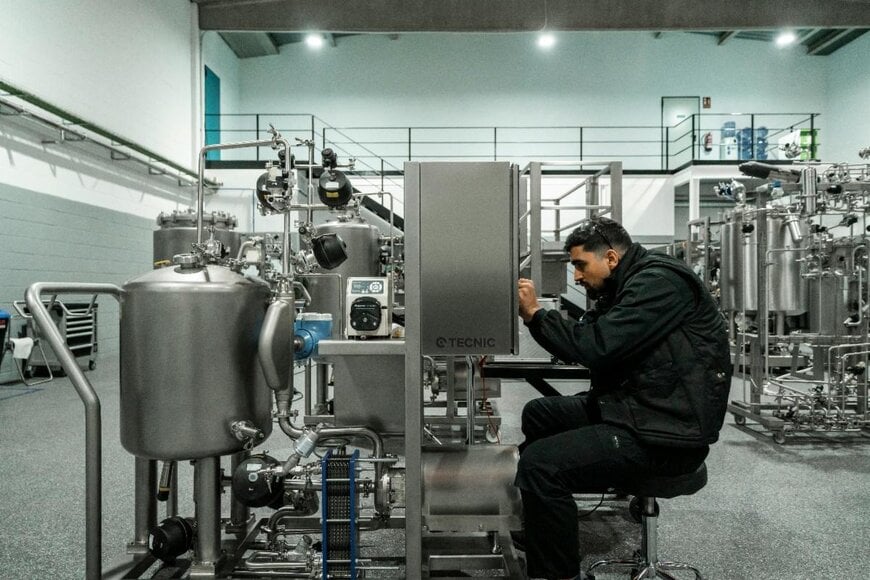
Miura America is addressing the highly variable steam demands of the dairy and beverage industries with its modular, compact once-through watertube boilers. In facilities where pressure drops can compromise validated pasteurization temperatures or delay clean-in-place (CIP) sanitation cycles, traditional high-capacity boilers often struggle with inefficient part-load operations. Miura’s modular systems distribute steam generation across multiple smaller units, providing precise load tracking, rapid response times, and scalable capacity to maintain critical production stability without excessive energy waste.
Managing variable loads and N+1 redundancy
A dairy or beverage plant’s steam consumption pulses throughout the day, driven by morning startups, batch changes, and intermittent CIP cycles. Instead of relying on a single large boiler that cycles inefficiently during low-demand periods, Miura’s modular architecture stages multiple compact units to precisely match the actual production curve. For instance, a facility requiring 900 boiler horsepower at peak can utilize four 300-horsepower units. If one module goes offline for maintenance, the remaining three seamlessly sustain the full 900-horsepower load. This N+1 redundancy secures critical operations without requiring a massive, fully duplicated standby boiler. As demand fluctuates, the system automatically activates or shuts down individual modules, keeping the active boilers within their most efficient firing ranges.
Rapid response and predictive maintenance
To prevent pressure sag at the process equipment, Miura’s once-through watertube boilers can reach 150 psig from a cold start in approximately five minutes, and begin producing steam in seconds from a hot standby mode. To protect these rapid-response capabilities, the system pairs with integrated water treatment equipment and the Miura Connect remote monitoring platform. Because untreated hard water causes scale that impedes heat transfer and drives up tube temperatures, the platform continuously tracks water quality and operational metrics. Operators receive immediate text or email notifications if water hardness or tube temperatures drift, while a color-coded dashboard allows multi-site managers to execute a predict-and-prevent maintenance strategy before an unplanned outage occurs.
Additional Context: Low-water-volume watertube vs. firetube boilers
This section details technical specifications and competitive benchmarking not included in the original product announcement.
Traditional firetube boilers used in industrial processing hold massive volumes of water, making them inherently slow to respond to sudden load spikes and requiring hours to reach operating pressure from a cold start. This large volume of high-pressure hot water also represents a massive amount of stored potential energy. Once-through watertube boilers resolve these issues by utilizing a low-water-volume design where feedwater is pumped through a continuous network of tubes heated directly by the burner. This drastic reduction in internal water volume enables the five-minute cold-start times necessary to track highly volatile food processing loads. Furthermore, the minimal water volume inherently limits the stored thermal energy within the pressure vessel, effectively eliminating the risk of catastrophic steam-side explosions and vastly improving overall boiler room safety.
Edited by an industrial journalist, Lekshman Ramdas, with AI assistance.
www.miuraboiler.com
