
www.industry-asia-pacific.com
15
'26
Written on Modified on
Digital Rail Traffic Management for Network Modernization
Alstom delivers Area 1 of KiwiRail's Traffic Management System across 1,200 kilometers of corridor to consolidate multi-line dispatching and network visibility.
www.alstom.com
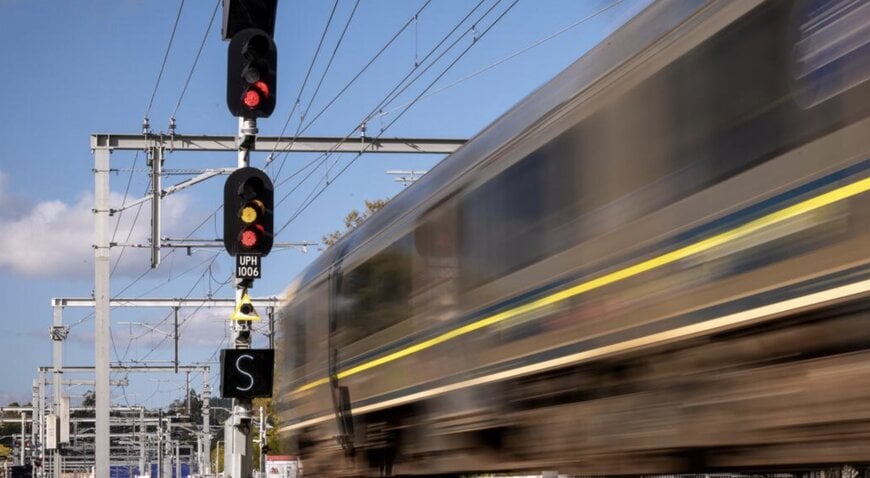
National railway networks operating mixed freight and regional passenger services face mounting coordination bottlenecks when dispatching across extensive single-track corridors and high-density junction points. Managing dispersed field stations, level crossings, and train movements using disconnected legacy control interfaces increases operational overhead, slows conflict resolution, and constrains network capacity. To solve these operational challenges, transport operators require centralized traffic management architectures that unify real-time tracking, conflict detection, and dynamic scheduling across shared track infrastructure.
Centralized Corridor Supervision and Scaling
Alstom deployed Area 1 of KiwiRail's Traffic Management System into operational service across New Zealand's Lower North Island. The digital supervision deployment covers approximately 1,200 kilometers of rail corridor and connects close to 90 stations along the route extending from Hamilton to Wellington.
The deployment follows an initial validation pilot deployed on the Wairarapa Line in May 2025, which operated across an eight-station testing environment. Moving from the localized pilot to Area 1 operational rollout expands automated supervisory control over critical freight routes and high-frequency passenger corridors, transitioning dispatchers to an integrated operating model.
Platform Architecture and Operational Coordination
The deployment operates on Alstom's Onvia Vision traffic management platform, previously designated as Iconis. The system unifies trains, station interlockings, and route track circuits into a single digital operational platform to provide network-wide visibility.
By aggregating live tracking and signaling states across regional territory lines into a unified interface, the platform optimizes train path allocation and traffic regulation. Centralized route management enables dispatchers to detect potential headway conflicts in advance, adjust dispatch timing dynamically during delays, and maintain schedule reliability across high-traffic rail arteries.
Additional Context
This section details technical specifications and competitive benchmarking not included in the original product announcement.
Modern railway Traffic Management Systems operate within the upper supervisory layer of railway automation hierarchies, standardly interfacing with European Rail Traffic Management System or Automatic Train Supervision architectures. Under European Standard EN 50128 and CENELEC safety guidelines, supervisory traffic management engines sit above Safety Integrity Level 4 interlocking frameworks, translating high-level timetables into deterministic route commands while continuously calculating automated conflict resolution algorithms.
In the global rail traffic management market, platforms such as Alstom Onvia Vision benchmark against architectures including Siemens Mobility's Trainguard and Vicos systems, Hitachi Rail's integrated rail management platforms, and Thales NetTrac. Key competitive benchmarks focus on maximum simultaneous managed track kilometers, scalability across complex multi-operator corridors, and real-time path rescheduling latency under mixed traction environments. Incorporating automated re-regulation engines enables modern traffic management frameworks to simulate multiple dispatch scenarios simultaneously, minimizing cumulative secondary delays across multi-branch railway topographies.
Edited by Romila DSilva, Induportals Editor, with AI assistance.
www.alstom.com
