
www.industry-asia-pacific.com
08
'26
Written on Modified on
Fighter Jet Mass Production Architecture
Korea Aerospace Industries and the Defense Acquisition Program Administration initiate series assembly of the KF-21 fighter to modernize national defense infrastructure.
www.koreaaero.com
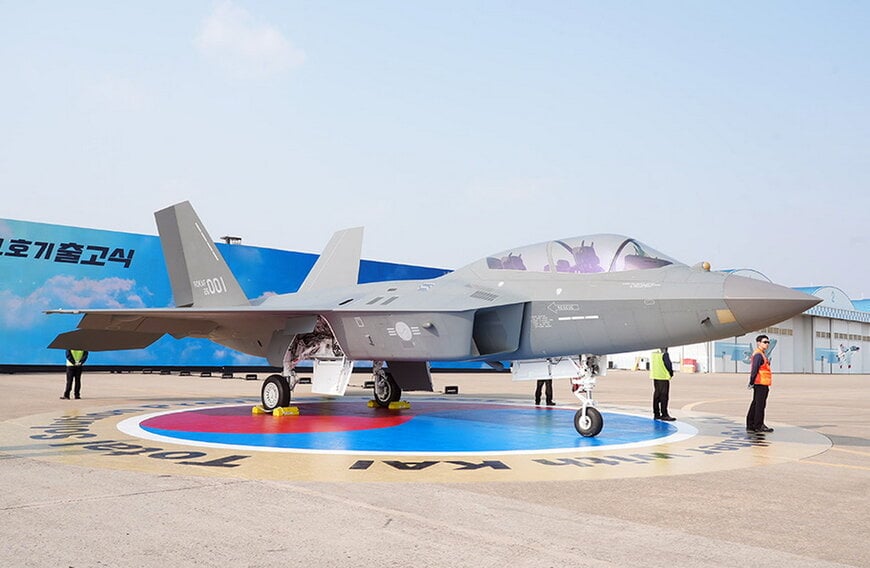
Korea Aerospace Industries and the Republic of Korea government have commenced serial production of the KF-21 supersonic fighter aircraft. The joint initiative addresses fleet obsolescence within the Republic of Korea Air Force by manufacturing and deploying an indigenous 4.5-generation multirole airframe.
Industrial Roles and Operational Challenges
The program addresses the logistical and technical burdens associated with maintaining legacy third- and fourth-generation airframes, specifically the F-4 and F-5 fleets. Maintaining aging systems introduces supply chain vulnerabilities, escalation of lifecycle costs, and reduced airframe availability.
The partnership combines state oversight and financing through the Defense Acquisition Program Administration with the airframe manufacturing, systems integration, and assembly capacity of Korea Aerospace Industries. Large-scale domestic integration was required to reduce foreign subsystem dependencies and guarantee domestic maintenance, repair, and overhaul capabilities.
Technical Systems and Production Baseline
The serial-production baseline incorporates indigenous avionics architectures, centralizing around an active electronically scanned array (AESA) radar and integrated electronic warfare suites. The AESA radar provides multi-target tracking and detection performance using solid-state transmit-receive modules, integrated directly with onboard sensors to ensure passive identification and threat response.
The initial production variant establishes full air-to-air engagement envelope capabilities. Avionics and weapon bus architectures utilize open-system approaches, facilitating scheduled Block-level upgrades for air-to-ground precision targeting systems and standoff strike capabilities without redesigning the primary airframe structure.
Ground Validation and Fleet Integration
Production unit serial number 1 is staged at Korea Aerospace Industries facilities in Sacheon. Prior to operational handover scheduled for late 2026, the airframe will undergo environmental testing, avionics verification, static stress evaluations, and formal flight-envelope certification.
Upon completion of system validation, the aircraft transitions into operational squadrons. The platform interfaces directly with existing tactical data links and network-centric command structures, standardizing maintenance procedures and spare-part logistics across frontline operating wings.
Industrial and Operational Impact
Transitioning to series production establishes serial supply chains across sub-tier defense contractors, directly lowering unit acquisition costs through manufacturing economies of scale. The standardization of indigenous sensors and structural components improves mean time between maintenance interventions and secures lifecycle supply chain independence. The baseline also establishes a verified platform architecture suitable for international defense procurement programs requiring supersonic airframes with localized subsystem support.
Edited by Evgeny Churilov, Induportals Media - Adapted by AI.
www.koreaaero.com
