
www.industry-asia-pacific.com
16
'26
Written on Modified on
GE Vernova Supplies Turbines for Japanese Wind Farm
Seven 4.2 MW workhorse turbines will power the 29.4 MW Eurus Hiyamizutouge project in Aomori Prefecture.
www.gevernova.com
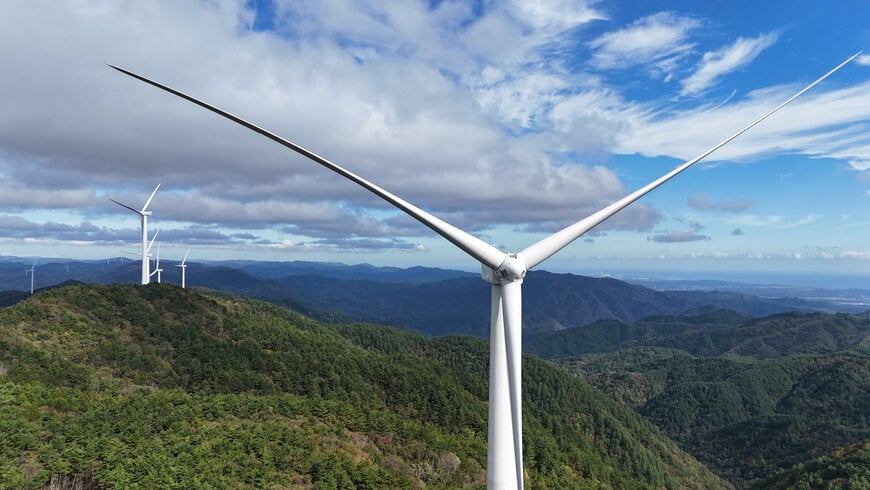
GE Vernova has announced an agreement with Eurus Energy Holdings Corporation to supply seven 4.2 MW-117m wind turbines for the 29.4 MW Eurus Hiyamizutouge Wind Farm in Mutsu City and Higashidori Village, Japan. The contract includes a two-year service agreement with an option for a two-year extension.
Part of GE Vernova’s standardized 4 MW workhorse platform, the selected turbines have logged over 2 million operating hours globally and are specifically engineered to deliver high-output reliability in Japan’s unique wind environment. The company currently accounts for 25% of Japan's installed onshore wind capacity and approximately 50% of its heavy-duty gas turbine power generation. Project leaders highlighted that the wind farm will directly support Japan’s national target of generating 36% to 38% of its electricity from renewable sources by 2030. The agreement builds on GE Vernova’s strong momentum in the Japanese market—having secured 339 MW of orders in 2025 across established utilities and independent producers—and follows a recent joint focus group launched with Japan's Ministry of Economy, Trade and Industry (METI) to accelerate energy innovation.
Additional Context
This section provides technological and market background not explicitly detailed in the original release.
Japan’s topography and geographic location present unique challenges for onshore wind energy, characterized by turbulent wind flows, complex mountainous terrain, and extreme weather events such as typhoons. To ensure structural survivability and maximize energy capture in these demanding conditions, modern wind turbines require ruggedized designs and advanced pitch-control systems that can rapidly shed aerodynamic loads during extreme gusts. By leveraging a "workhorse" strategy built around standardized, industrialized platforms, manufacturers can streamline global supply chains and simplify long-term operations and maintenance (O&M). This repeatable execution is critical for minimizing equipment downtime and lowering the levelized cost of energy (LCOE) in Japan's highly regulated, space-constrained renewable energy sector.
Edited by Lekshman Ramdas, Induportals editor – adapted by AI.
www.gevernova.com
