
www.industry-asia-pacific.com
21
'26
Written on Modified on
Toshiba 300 kV SF6-Free Breaker Selected by TEPCO Power Grid
TEPCO Power Grid has selected Toshiba Corporation's 300 kV natural-origin gas circuit breaker and gas-insulated bus for grid installation.
www.global.toshiba
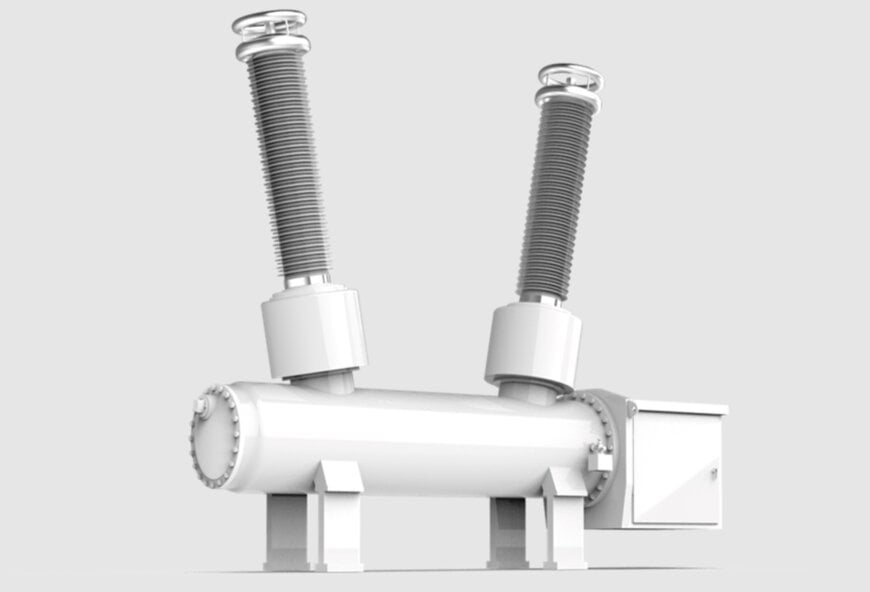
Toshiba Corporation has announced that TEPCO Power Grid, Incorporated has selected Toshiba's 300 kV dead tank gas circuit breaker (DT-GCB) and three-phase gas-insulated bus (GIB) for integration into its power transmission and distribution network. The equipment eliminates sulfur hexafluoride (SF6) by utilizing a natural-origin gas mixture of carbon dioxide and oxygen for electrical insulation, marking the first commercial adoption for 300 kV-class DT-GCB and GIB units using natural-origin gas insulation.
AEROXIA Portfolio Development and Delivery Schedule
Toshiba is developing the 300 kV DT-GCB and GIB as core offerings within its AEROXIA brand lineup of natural-origin gas transmission and distribution equipment, matching the operational performance of conventional SF6 systems while reducing greenhouse gas emissions. Toshiba plans to deliver the DT-GCB in fiscal year 2029 and the GIB in fiscal year 2030.
The company will present the AEROXIA portfolio, including the 300 kV DT-GCB and GIB, at its exhibition booth during the CIGRE Paris 2026 Exhibition from August 23 to 28, 2026.
Grid Protection and Environmental Insulation Architecture
Dead tank gas circuit breakers interrupt fault currents during transmission line abnormalities to isolate disturbances from adjacent substation equipment. Gas-insulated buses utilize metallic conductor busbars housed within high-dielectric gas enclosures to transmit high-voltage electricity between switching bays, transformers, and external transmission lines without phase-to-ground flashovers.
High-voltage transmission assets require dielectric gas barriers between energized conductors and grounded enclosure tanks. SF6 gas has historically served as the primary dielectric medium, but possesses a global warming potential approximately 25,000 times greater than carbon dioxide. To address environmental impact, toxicity concerns, decomposition byproduct handling, and long-term operating reliability, the AEROXIA product line employs naturally occurring gases such as oxygen and carbon dioxide. The design satisfies the seven technical requirements for SF6 alternatives defined by Japanese electric utilities, manufacturers, and research bodies.
Commercial Deployment and High-Voltage Experience
Toshiba previously commercialized and delivered 72/84 kV gas-insulated switchgear (GIS) and 420/550 kV GIB systems operating on natural-origin gases. Building on verified baseline performance testing of 300 kV GIS and DT-GCB systems, the manufacturer is applying this engineering framework to produce the commercial units selected by TEPCO Power Grid.
Additional Context
This section details technical specifications not included in the original news release.
Natural-origin gas mixtures combining carbon dioxide and oxygen operate as non-fluorinated dielectric mediums without generating per- and polyfluoroalkyl substances (PFAS) during thermal decomposition. Carbon dioxide functions as the primary insulating and arc-quenching base gas, while oxygen additions—typically ranging from four to ten percent by volume—prevent the deposition of conductive free carbon soot during high-energy electrical arc interruption. Because natural-origin gas mixtures possess a lower dielectric breakdown strength per unit volume compared to sulfur hexafluoride, high-voltage switchgear architectures utilize increased gas filling pressures (generally between 0.6 and 0.8 megapascals) and specialized dielectric surface conditioning along high-voltage conductors to maintain standard basic insulation level (BIL) ratings.
High-voltage circuit breakers utilizing carbon dioxide and oxygen mixtures rely on optimized thermal puffers and double-motion interrupter nozzle geometries to handle short-circuit current interruptions reaching breaking capabilities of up to 63 kiloamperes. The thermodynamic properties of carbon dioxide provide high post-arc thermal recovery rates across transient recovery voltage (TRV) peaks without liquefying at low ambient operating temperatures down to minus 50 degrees Celsius, eliminating the need for external tank heating jackets in outdoor substation environments.
Edited by Romila DSilva, Induportals Editor, with AI assistance.
www.global.toshiba
