
www.industry-asia-pacific.com
24
'26
Written on Modified on
Process Control Integration for Energy Efficiency in Cement Manufacturing
Nippon Steel Blast Furnace Slag Cement Company has implemented ABB Ability Expert Optimizer at its Muroran plant to enhance thermal efficiency and operational stability.
global.abb
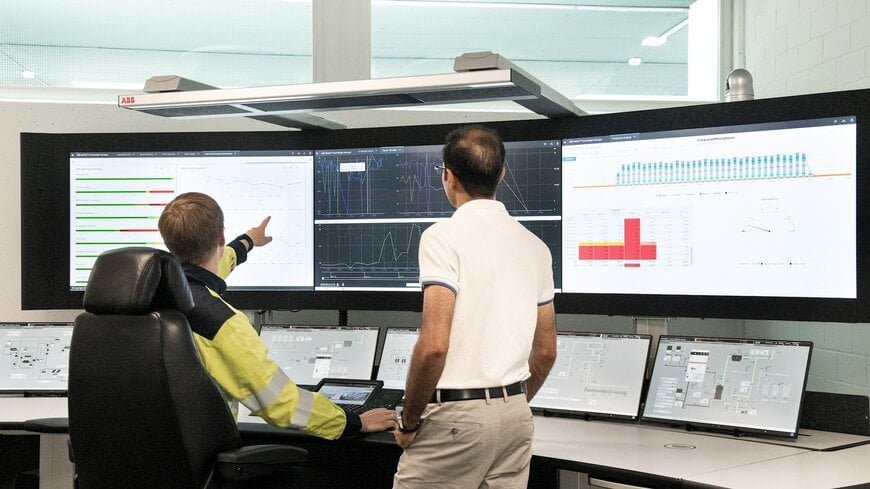
Nippon Steel Blast Furnace Slag Cement Company Ltd., a subsidiary operating within the steelmaking sector, produces low-carbon cement by replacing clinker with blast furnace slag. To advance toward high levels of automation and process stability, the manufacturer required an advanced process control architecture capable of mitigating thermal and operational fluctuations inherent to high-volume cement production.
ABB provided its Expert Optimizer platform, a digital control and optimization solution designed for industrial process environments. The system utilizes Model Predictive Control (MPC) combined with artificial intelligence algorithms to evaluate variables such as temperature, pressure, and exhaust gas concentrations in real time. Responsibilities were divided between the hardware operator and software provider: Nippon Steel integrated the control software into its existing plant infrastructure, while ABB conducted a comparative performance evaluation to benchmark plant metrics before and after deployment.
Technical Architecture and Plant Integration
The optimization software continuously analyzes plant data to predict operational deviations and make automatic setpoint adjustments without manual intervention. During the initial commissioning phase at the 1.6 million-ton per annum Muroran facility in Hokkaido, Japan, the system achieved an automatic operation rate exceeding 90 percent.
The software maintains process control under non-standard operating conditions, such as preheater cleaning cycles. By automating routine adjustments, manual operator interventions decreased by approximately 80 percent, while providing plant operators with real-time process insights to support ongoing operational adjustments.
Energy and Quality Impact Analysis
The application of continuous predictive control addressed variability in the kiln system, yielding measurable process parameters:
- Specific Heat Consumption: Reduced by 2.2 percent through automated optimization of thermal inputs.
- Free Lime Content: Decreased by approximately 10 percent, stabilizing a primary quality indicator and improving output consistency.
- Carbon Emissions: The process efficiency gains further reduce the carbon footprint of blast furnace slag cement, which inherently generates approximately 40 percent less carbon dioxide compared to Ordinary Portland Cement due to clinker substitution.
The deployment demonstrates the application of digital infrastructure and industrial automation in heavy manufacturing, establishing stable operating conditions across high-capacity production lines.
Edited by Evgeny Churilov, Induportals Media - Adapted by AI.
www.abb.com
Edited by Evgeny Churilov, Induportals Media - Adapted by AI.
www.abb.com
