
www.industry-asia-pacific.com
30
'26
Written on Modified on
Life Cycle Service Agreements for Grinding Mills in Asia Pacific
Metso secures long-term performance agreements to optimize grinding mill lining systems.
www.metso.com
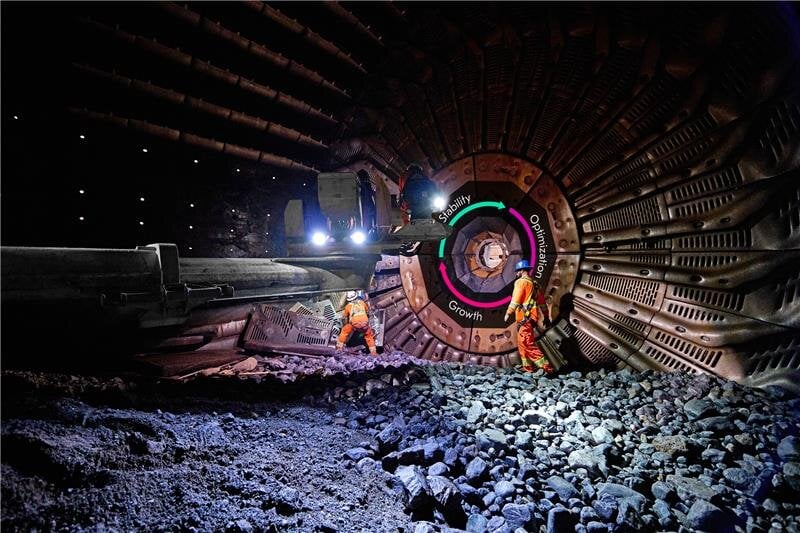
Metso has signed two new long-term Life Cycle Services (LCS) agreements for grinding mill lining in the Asia Pacific region during the first half of 2026. Combined with two agreements initiated in 2025, the total value of these contracts exceeds EUR 25 million, with service periods extending up to three years. These agreements integrate Metso’s proprietary equipment, technical expertise, and inventory management to enhance operational efficiency and maintenance predictability.
Performance-Based Service Models
Two of these agreements utilize performance-based structures, linking liner performance metrics directly to mill throughput and total service life. By sharing operational responsibility and targets between the provider and the operator, these contracts minimize maintenance risks and stabilize production planning. The remaining agreements are tailored to site-specific requirements, encompassing services such as consignment stock management, scheduled delivery synchronization, on-site technical support during maintenance shutdowns, and systematic inspections. These models allow customers to consolidate their supplier base while ensuring standardized, reliable mill lining supply.
Data-Driven Optimization
The service framework is built upon jointly defined performance targets and continuous monitoring of liner wear. Through data-driven decision-making and iterative optimization of lining geometry and materials, Metso aims to achieve measurable improvements in mill availability. Metso currently supports over 600 active Life Cycle Services agreements globally, ranging from basic spare parts supply to comprehensive, full-site equipment management.
Additional Context: This section details technical specifications not included in the original announcement
In mineral processing, the mill lining is a critical wear component in tumbling mills (such as SAG or ball mills). The lining serves two primary functions: protecting the mill shell from direct impact by ore and grinding media (steel balls), and transferring mechanical energy to the grinding charge. The geometry of the lifter bars is the primary determinant of the grinding media's trajectory. Incorrect profiles or excessive wear lead to inefficient "cascading" motion rather than the desired "cataract" effect, where grinding energy is wasted as heat rather than particle comminution. Modern LCS approaches utilize 3D laser scanning of the mill interior during shutdowns to map precise wear profiles. These data sets are then processed via Discrete Element Method (DEM) software simulations to iteratively redesign future lining geometries, maximizing throughput while reducing specific energy consumption. Aligning these technical optimizations with service contracts ensures that redesigned components are delivered precisely in time with maintenance cycles, effectively eliminating unplanned downtime.
Edited by Lekshman Ramdas, Induportals editor – adapted by AI.
www.metso.com
