
www.industry-asia-pacific.com
24
'26
Written on Modified on
NVIDIA Introduces AI Software Libraries for Scientific Research
NVIDIA has launched new software tools, including DAQIRI and ALCHEMI NIM microservices, at the ISC High Performance conference to accelerate AI-driven scientific workflows.
www.nvidia.com
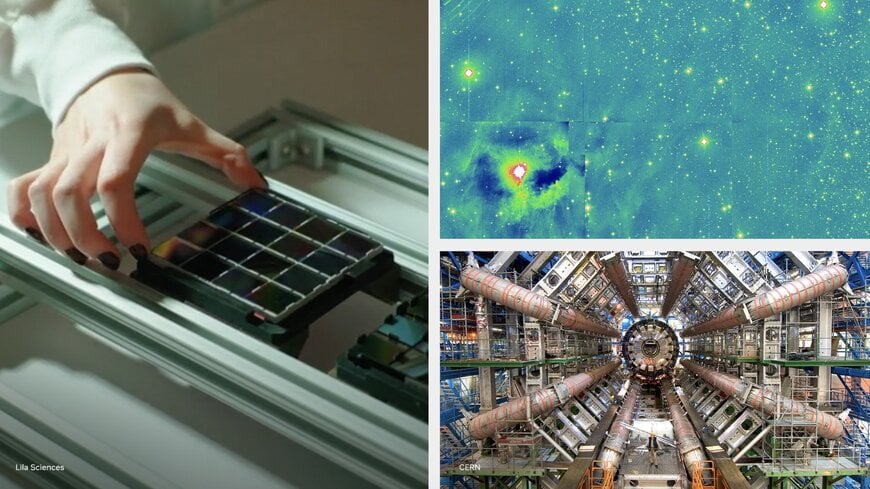
At the ISC High Performance conference running in Hamburg from June 22 to 26, 2026, NVIDIA introduced new software tools engineered to accelerate artificial intelligence applications across scientific disciplines, spanning quantum chemistry, materials discovery, and astrophysics. The new libraries—including NVIDIA DAQIRI, the upcoming NVIDIA cuPhoton reference code, and NVIDIA ALCHEMI NIM microservices—are designed to transition hours-long CPU workloads into real-time, GPU-accelerated pipelines. These technologies integrate natively into NVIDIA CUDA-X, a suite of software tools and acceleration libraries designed for high-performance computing (HPC) and enterprise AI applications.
Observational Astrophysics and Data Streaming
For experimental astronomy, the upcoming NVIDIA cuPhoton reference code acts as a specialized software framework for extracting insights from high-dimensional, multi-dimensional datasets gathered by telescopes, laser experiments, and X-ray instruments. Running on rack-scale NVIDIA GB200 NVL72 architectures, the reference code speeds up the loading, reading, processing, and visualization of petabytes of Flexible Image Transport System (FITS) data. In early access evaluations using images from the Rubin Observatory’s Legacy Survey of Space and Time (LSST)—the largest digital camera built—cuPhoton accelerated the ingestion of FITS files by 14,900x. When scaled across 32 NVIDIA Grace Blackwell superchips, it achieved an 8,400x increase in signal processing and analysis throughput. Developed in collaboration with Princeton University and utilized alongside Harvard University, the reference code enables rapid processing for large-scale dark energy and astrophysical surveys.
Concurrently, NVIDIA introduced DAQIRI (Data Acquisition for Integrated Real-time Instruments), a high-performance networking library developed within the NVIDIA Holoscan Platform. Traditional hardware-centric systems frequently drop data packets when fast physical sensors or detectors generate information faster than local memory arrays can execute disk saves. DAQIRI bypasses this limitation by managing high-bandwidth sensor data streams in real time as they arrive. The library is deployed within the A-GHOST research project—a collaboration involving CERN, the University of Chicago, and University College London under the CERN openlab framework. The system applies real-time AI inference to collision data captured by the ATLAS Experiment, capturing potentially significant signals from over 99% of the dataset that would normally be discarded due to storage constraints.
Chemical and Atomistic Simulation Frameworks
NVIDIA ALCHEMI consists of a suite of domain-specific NIM microservices and a specialized developer toolkit engineered to optimize chemical and materials discovery for use cases including battery materials, catalysts, organic light-emitting diodes (OLEDs), and consumer beauty products. In March 2026, the company released two dedicated ALCHEMI NIM microservices designed to process millions of materials concurrently using machine learning interatomic potentials (MLIPs):
- Batched Geometry Relaxation (BGR): An AI-accelerated container that determines the most structurally stable geometry configuration for a batch of molecules.
- Batched Molecular Dynamics (BMD): A microservice hosting models like MACE-MPA-0 to simulate how atomic arrangements and molecular structures change over time.
ALCHEMI will also integrate a dedicated microservice for the Vienna Ab initio Simulation Package (VASP), allowing developers to execute multiple density functional theory calculations on a single GPU via the NVIDIA Multi-Process Service. This microservice provides a 3x throughput improvement for geometry optimization steps. Additionally, researchers can utilize the ALCHEMI Toolkit and the Toolkit-Ops repository to train custom MLIP surrogate models and coordinate atomistic simulation workflows.
Autonomous Life Sciences Deployment
Lila Sciences, a developer of scientific superintelligence platforms and autonomous laboratory systems, integrated the full NVIDIA computing stack into its simulation loop. Collaborating with NVIDIA on a high-fidelity magnet simulation presented at the GTC San Jose conference in March 2026, Lila Sciences utilized the ALCHEMI BGR microservice to accelerate high-throughput materials screening by 50x to isolate stable chemical compositions.
The company subsequently applied the early-access ALCHEMI VASP microservice to accelerate the calculation of complex magnetic behaviors by 30% for shortlisted compounds. By leveraging ALCHEMI’s specialized kernels tailored for TensorNet architectures, Lila Sciences achieved a 6x speedup in joint training and inference cycles while lowering local memory footprint requirements threefold. The platform evaluates multiple compositions directly in GPU memory, supporting broad discovery loops across materials science, catalysis, and electromagnetics. For end-to-end model training, inference serving, and digital twin management, the autonomous lab platform incorporates NVIDIA Megatron-LM, Nemotron 3 Nano, Nemotron 3 Super, NeMo RL, BioNeMo, Triton Inference Server, and NVIDIA Omniverse libraries. Andy Beam, Co-founder and Chief Technology Officer of Lila Sciences, noted that the unified computing stack enables scientific discovery at a volumetric scale that is inaccessible via unaccelerated individual research methods.
Additional Context
This section details technical specifications not included in the original news release.
Data acquisition (DAQ) in high-energy physics and experimental astrophysics involves streaming vast volumes of raw data from physical detectors directly into digital compute infrastructure. In experiments like the ATLAS detector at CERN, particle collisions occur at sub-nanosecond intervals, generating multi-terabit streams of analog detector outputs that must be digitized and filtered immediately. Traditional DAQ systems route these packets through layers of field-programmable gate arrays (FPGAs) and central processing units (CPUs). This standard TCP/IP networking architecture copies data several times through the Linux kernel network stack, creating major CPU bottlenecks and high latency that forces the system to discard over 99% of raw events through coarse, hardwired trigger thresholds.
NVIDIA DAQIRI eliminates these software bottlenecks by implementing a software-defined architecture based on the Data Plane Development Kit (DPDK) and GPUDirect Remote Direct Memory Access (RDMA) technologies. By utilizing kernel bypass mechanisms, DAQIRI gives userspace applications direct access to the ring buffers of ConnectX network interface cards (NICs), removing the operating system kernel from the data transit path entirely.
The software can split incoming packets through a Header-Data Split mode, where packet headers are routed to the host CPU for initial network validation while the massive scientific data payload is copied directly via the PCIe bus into the Direct Memory Access (DMA) buffers of the GPU memory without any intermediate host-side buffering.
Once inside GPU memory, the raw byte arrays are formatted directly into GPU tensors. This allows real-time deep learning models, such as convolutional auto-encoders or temporal convolutional networks, to execute in-stream anomaly detection and filtering on the complete, uncompressed data stream at line rate, preventing the loss of critical experimental signals.
Edited by Romila DSilva, Induportals Editor, with AI assistance.
Autonomous Life Sciences Deployment
Lila Sciences, a developer of scientific superintelligence platforms and autonomous laboratory systems, integrated the full NVIDIA computing stack into its simulation loop. Collaborating with NVIDIA on a high-fidelity magnet simulation presented at the GTC San Jose conference in March 2026, Lila Sciences utilized the ALCHEMI BGR microservice to accelerate high-throughput materials screening by 50x to isolate stable chemical compositions.
The company subsequently applied the early-access ALCHEMI VASP microservice to accelerate the calculation of complex magnetic behaviors by 30% for shortlisted compounds. By leveraging ALCHEMI’s specialized kernels tailored for TensorNet architectures, Lila Sciences achieved a 6x speedup in joint training and inference cycles while lowering local memory footprint requirements threefold. The platform evaluates multiple compositions directly in GPU memory, supporting broad discovery loops across materials science, catalysis, and electromagnetics. For end-to-end model training, inference serving, and digital twin management, the autonomous lab platform incorporates NVIDIA Megatron-LM, Nemotron 3 Nano, Nemotron 3 Super, NeMo RL, BioNeMo, Triton Inference Server, and NVIDIA Omniverse libraries. Andy Beam, Co-founder and Chief Technology Officer of Lila Sciences, noted that the unified computing stack enables scientific discovery at a volumetric scale that is inaccessible via unaccelerated individual research methods.
Additional Context
This section details technical specifications not included in the original news release.
Data acquisition (DAQ) in high-energy physics and experimental astrophysics involves streaming vast volumes of raw data from physical detectors directly into digital compute infrastructure. In experiments like the ATLAS detector at CERN, particle collisions occur at sub-nanosecond intervals, generating multi-terabit streams of analog detector outputs that must be digitized and filtered immediately. Traditional DAQ systems route these packets through layers of field-programmable gate arrays (FPGAs) and central processing units (CPUs). This standard TCP/IP networking architecture copies data several times through the Linux kernel network stack, creating major CPU bottlenecks and high latency that forces the system to discard over 99% of raw events through coarse, hardwired trigger thresholds.
NVIDIA DAQIRI eliminates these software bottlenecks by implementing a software-defined architecture based on the Data Plane Development Kit (DPDK) and GPUDirect Remote Direct Memory Access (RDMA) technologies. By utilizing kernel bypass mechanisms, DAQIRI gives userspace applications direct access to the ring buffers of ConnectX network interface cards (NICs), removing the operating system kernel from the data transit path entirely.
The software can split incoming packets through a Header-Data Split mode, where packet headers are routed to the host CPU for initial network validation while the massive scientific data payload is copied directly via the PCIe bus into the Direct Memory Access (DMA) buffers of the GPU memory without any intermediate host-side buffering.
Once inside GPU memory, the raw byte arrays are formatted directly into GPU tensors. This allows real-time deep learning models, such as convolutional auto-encoders or temporal convolutional networks, to execute in-stream anomaly detection and filtering on the complete, uncompressed data stream at line rate, preventing the loss of critical experimental signals.
Edited by Romila DSilva, Induportals Editor, with AI assistance.
