
www.industry-asia-pacific.com
24
'26
Written on Modified on
Rainbow Pellet Starts Up World’s First Steam-Ex Pellet Plant
Rainbow Pellet Sdn Bhd has initiated operations at the world's first commercial-scale Steam-Ex pellet plant using ANDRITZ steam explosion technology in Malaysia.
www.andritz.com
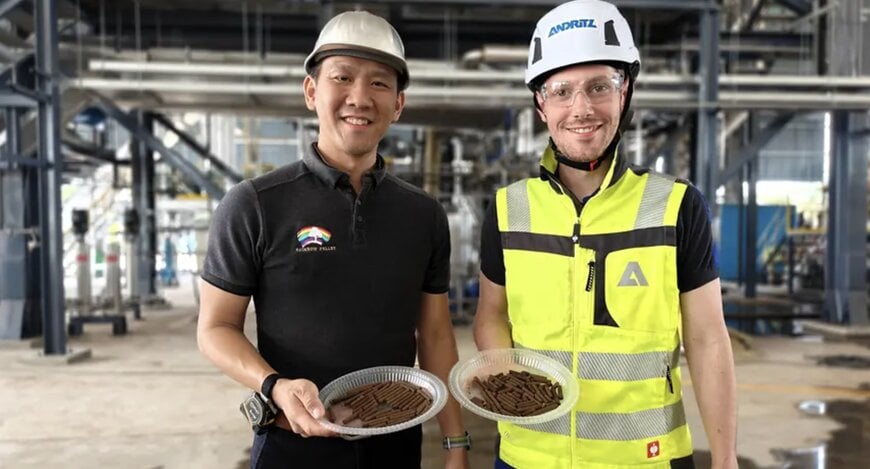
Rainbow Pellet Sdn Bhd has started up a commercial-scale Steam-Ex pellet plant for empty fruit bunches (EFB) at its production facility in Kuala Lipis, Malaysia. The facility integrates processing equipment from ANDRITZ to convert oil palm agricultural residues into advanced solid biofuels intended for direct coal replacement in industrial energy applications.
Biomass Processing and Pretreatment Technology
Empty fruit bunches represent a residual biomass stream generated by the palm oil extraction industry. The material possesses high moisture content and a fibrous, complex cellular structure, which historically restricted its use to lower-value agricultural applications or left it underutilized. The Kuala Lipis production line addresses these raw material characteristics by utilizing a specialized processing train.
The Steam-Ex line relies on an ANDRITZ pretreatment configuration leveraging thermal-mechanical steam explosion technology. To manage the continuous process flows and maintain operational stability, the equipment vendor also delivered the central automation system, engineering integration packages, and factory start-up services. The processing sequence is designed to alter the physical and chemical properties of the fibrous biomass, supporting the extrusion of high-density pellets suitable for high-throughput logistics and thermal co-firing.
Additional Context
This section details technical specifications not included in the original news release.
Oil palm empty fruit bunches (EFB) are challenging feedstocks for solid biofuel manufacturing due to their complex lignocellulosic structure, high moisture retention, and elevated concentrations of alkali metals, particularly potassium and sodium. These alkali metals lower the ash melting point during combustion, causing severe slagging, fouling, and high-temperature corrosion on the heat exchanger tubes of industrial boilers. Conventional mechanical drying and pelletizing methods cannot alleviate these chemical constraints, resulting in low-density pellets that degrade rapidly when exposed to atmospheric humidity.
Steam explosion (Steam-Ex) technology alters these physical and chemical parameters through a localized thermo-mechanical process. The raw EFB fibers are loaded into a pressurized reactor vessel and subjected to high-pressure saturated steam, typically ranging between 180°C and 220°C at pressures of 10 to 22 bar, for a precise retention period. During this phase, the steam penetrates the porous matrix of the biomass, initiating autohydrolysis, where organic acids liberated from the hemicellulose break down the complex carbohydrate polymers.
The treatment cycle concludes with a rapid decompressive discharge to atmospheric pressure. This instantaneous pressure drop causes the superheated water trapped inside the cellular walls of the fiber to flash violently into vapor. The resulting volumetric expansion tears the microfibril bundles apart, disrupting the crystalline structure of the cellulose and depolymerizing the natural lignin binder.
This mechanical disruption increases the volumetric energy density of the processed material, renders it highly hydrophobic to prevent biological degradation during storage, and facilitates the washing out of water-soluble alkali chlorides. The modified, lignin-rich substrate can then be extruded through industrial pellet presses with lower mechanical power inputs, producing highly durable, water-resistant pellets that mimic the grinding and combustion characteristics of fossil coal.
Edited by Romila DSilva, Induportals Editor, with AI assistance.
www.andritz.com
