
www.industry-asia-pacific.com
12
'26
Written on Modified on
AI-based slurry mixing optimization for battery manufacturing
Kurimoto and Hitachi High-Tech collaborate to optimize battery slurry mixing processes using physical AI, process informatics and operational data to improve quality, productivity and yield.
www.hitachi.com
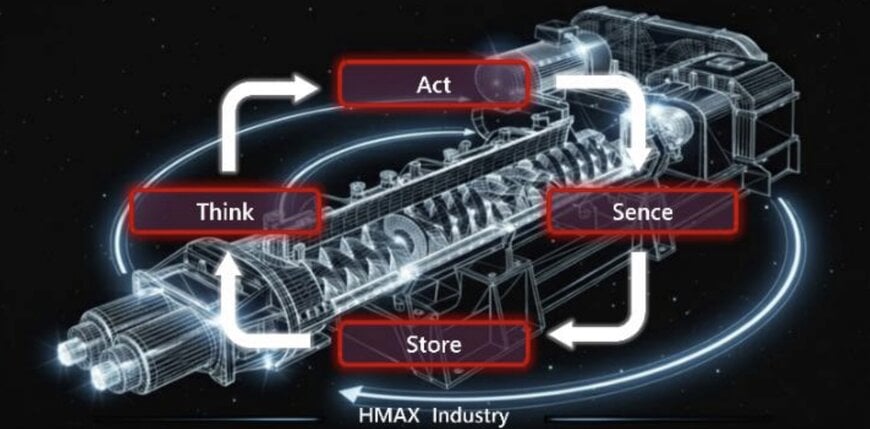
Kurimoto and Hitachi High-Tech have initiated a strategic collaboration to optimize the mixing processes involved in battery manufacturing through the integration of artificial intelligence and advanced measurement technologies.
Technical Optimization of Battery Slurry Manufacturing
The collaboration focuses on the preparation of battery slurry, a mixture of powders and liquids that is critical for determining electrode thickness, density, and overall battery performance. This stage has traditionally relied on the specialized expertise of operators to manage highly variable mixing conditions. To standardize and enhance this process, the partners are deploying specific technical solutions:
- KRC Kneader Integration: Kurimoto’s twin-screw continuous kneader is used to adjust mixing degrees for specific applications. By leveraging variable paddle configurations, the system can homogenize raw materials prone to agglomeration, reducing lot-to-lot quality variation.
- Generative AI for Process Control: Hitachi utilizes proprietary generative AI to propose optimal kneader settings and mixing conditions. The AI incorporates knowledge from patents, academic papers, and technical manuals to provide guidance even when historical prototype data is limited.
- Process Informatics (PI): Following prototype manufacturing, PI technology integrates data from image analysis and battery evaluations to predict performance and identify optimal manufacturing conditions.
HMAX Industry and Digital Twin Technology
The initiative is part of Hitachi Group’s HMAX Industry, a next-generation AI solution designed for industrial sectors. The collaboration aims to develop a "Kneaders x AI x Maintenance" solution that automates quality control during mass production. This system utilizes:
The initiative is part of Hitachi Group’s HMAX Industry, a next-generation AI solution designed for industrial sectors. The collaboration aims to develop a "Kneaders x AI x Maintenance" solution that automates quality control during mass production. This system utilizes:
- Real-time Analysis: AI analyzes inline data, such as torque and temperature, alongside real-time video feeds to monitor mixing conditions like viscosity and variation coefficients.
- Predictive Maintenance: Using digital twin technology, the system applies AI-driven predictive maintenance to identify potential equipment issues before they occur, ensuring a continuous and stable supply of homogeneous slurry.
Expected Operational Results
The primary objective of the partnership is to improve manufacturing yields and shorten the time required for production launches. Key anticipated results include:
The primary objective of the partnership is to improve manufacturing yields and shorten the time required for production launches. Key anticipated results include:
- Reduced Development Cycles: A significant reduction in the number of prototypes and man-hours required for verification and experiments.
- Stabilized Quality: Improved reproducibility of high-quality, high-solid-content slurries during the mass-production phase.
- Broad Industry Application: The developed mixing process technologies are intended to be expanded into related processes like drying, calcination, and pulverization across the chemicals, food, and pharmaceuticals sectors.
Additional Context
This section details technical specifications and competitive benchmarking not included in the original product announcement.
The integration of Process Informatics (PI) and physical AI into battery slurry mixing addresses a critical "black box" in the digital supply chain of energy storage manufacturing. While conventional batch mixers often suffer from inconsistent shear forces, the KRC Kneader’s continuous twin-screw design provides a more uniform energy input, which, when coupled with AI-driven paddle optimization, can increase slurry solids content by an estimated 5–10% compared to standard planetary mixers. Benchmarking against traditional trial-and-error methods suggests that using Materials Informatics (MI) and PI can reduce the experimental design space by up to 70%, significantly lowering the R&D costs for next-generation solid-state or high-nickel cathode slurries. Furthermore, the use of digital twin technology for predictive maintenance in the mixing phase is a strategic shift toward the automotive data ecosystem standards, where real-time torque monitoring can detect infinitesimal changes in viscosity, preventing the coating of out-of-specification slurry onto current collectors and reducing downstream scrap rates by a measurable margin.
Edited by Romila DSilva, Induportals editor – adapted by AI.
This section details technical specifications and competitive benchmarking not included in the original product announcement.
The integration of Process Informatics (PI) and physical AI into battery slurry mixing addresses a critical "black box" in the digital supply chain of energy storage manufacturing. While conventional batch mixers often suffer from inconsistent shear forces, the KRC Kneader’s continuous twin-screw design provides a more uniform energy input, which, when coupled with AI-driven paddle optimization, can increase slurry solids content by an estimated 5–10% compared to standard planetary mixers. Benchmarking against traditional trial-and-error methods suggests that using Materials Informatics (MI) and PI can reduce the experimental design space by up to 70%, significantly lowering the R&D costs for next-generation solid-state or high-nickel cathode slurries. Furthermore, the use of digital twin technology for predictive maintenance in the mixing phase is a strategic shift toward the automotive data ecosystem standards, where real-time torque monitoring can detect infinitesimal changes in viscosity, preventing the coating of out-of-specification slurry onto current collectors and reducing downstream scrap rates by a measurable margin.
Edited by Romila DSilva, Induportals editor – adapted by AI.
