
www.industry-asia-pacific.com
06
'26
Written on Modified on
Pumped-Storage Units for Grid Stability in India
GE Vernova Inc. and Megha Engineering & Infrastructures Limited deploy 1.35 GW pumped-storage hydropower system to support renewable integration and grid balancing.
www.gevernova.com
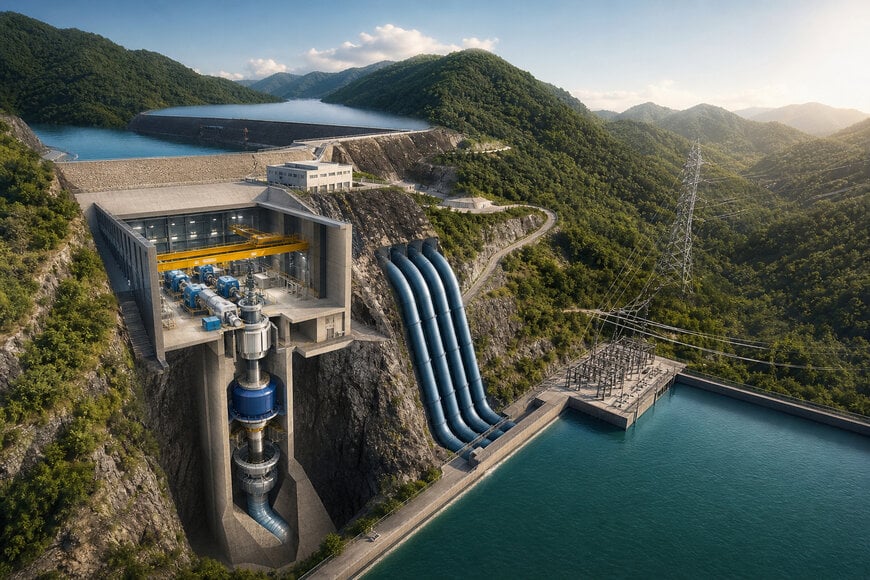
GE Vernova Inc. and Megha Engineering & Infrastructures Limited (MEIL) are cooperating to equip the Upper Sileru hydropower plant in Andhra Pradesh with pumped-storage technology designed for large-scale energy storage and grid stabilization.
Context of the Cooperation
GE Vernova Inc. is supplying electro-mechanical equipment and engineering services, while Megha Engineering & Infrastructures Limited is responsible for project development and execution. The cooperation addresses the increasing requirement for long-duration energy storage in India’s power system, driven by the rapid expansion of variable renewable energy sources such as solar and wind.
Pumped-storage hydropower is used to manage load variability by storing excess electricity during low-demand periods and releasing it during peak demand. The scale of the Upper Sileru project—1.35 GW—requires coordinated design, manufacturing, and system integration capabilities, necessitating collaboration between an equipment supplier and an engineering contractor.
Technical Solution and Responsibilities
The project includes nine 150 MW vertical Francis reversible pump-turbine units. These units operate in two modes: pumping water to an upper reservoir using surplus electricity and generating power by releasing stored water through turbines.
GE Vernova’s scope covers design, engineering, manufacturing, factory testing, and commissioning support, including control and governing systems. The reversible units are engineered for high hydraulic efficiency and rapid mode switching, enabling frequency regulation and peak load balancing.
The system integrates turbine control with grid synchronization mechanisms to maintain stability under fluctuating renewable input. The architecture supports long operational lifecycles, with components designed for multi-decade service under cyclic load conditions.
Deployment and Integration
The Upper Sileru facility is located in Andhra Pradesh and is scheduled for completion by 2030. Installation involves staged delivery of turbine-generator units, followed by mechanical erection, electrical integration, and system commissioning.
The plant will be integrated into India’s transmission network, functioning as part of the broader digital infrastructure for grid management. Coordination with existing hydropower assets and transmission systems is required to ensure seamless dispatch and load balancing.
Manufacturing and engineering activities are partly localized in India, leveraging GE Vernova’s domestic production facilities and workforce. This supports logistics efficiency and alignment with national industrial capabilities.
Applications and Use Cases
The primary application is grid-scale energy storage for renewable integration. Specific use cases include:
- Peak demand management through stored energy dispatch
- Frequency regulation via rapid response operation
- Load balancing for intermittent solar and wind generation
The system is also designed to enhance grid resilience by providing reserve capacity during fluctuations in generation or demand.
Expected Impact
With a total capacity of 1.35 GW, the plant is expected to supply electricity equivalent to the annual consumption of approximately three million households. Beyond capacity, the technical contribution lies in enabling higher penetration of renewables by mitigating intermittency.
Operational benefits derive from the system’s ability to store surplus generation and deliver it with high efficiency, reducing curtailment of renewable energy and improving overall grid utilization.
Edited by an industrial journalist Sucithra Mani with AI assistance.
www.gevernova.com
Expected Impact
With a total capacity of 1.35 GW, the plant is expected to supply electricity equivalent to the annual consumption of approximately three million households. Beyond capacity, the technical contribution lies in enabling higher penetration of renewables by mitigating intermittency.
Operational benefits derive from the system’s ability to store surplus generation and deliver it with high efficiency, reducing curtailment of renewable energy and improving overall grid utilization.
Edited by an industrial journalist Sucithra Mani with AI assistance.
www.gevernova.com
