
www.industry-asia-pacific.com
17
'26
Written on Modified on
Artificial Reefs Support Marine Biodiversity Recovery in Hong Kong
Arup contributes to reef design and deployment to enhance marine ecosystems and fisheries across Hong Kong waters.
www.arup.com
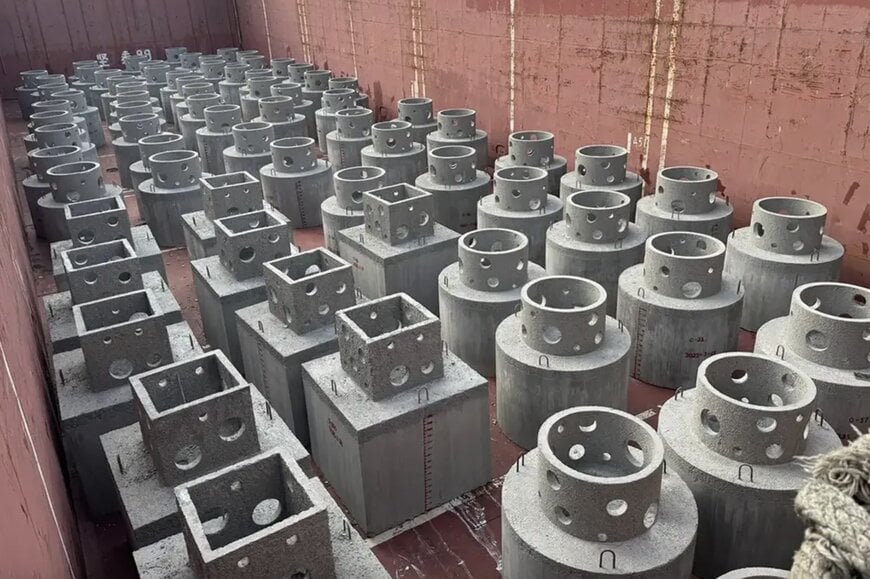
Artificial reefs are increasingly being used in Hong Kong as a nature-based solution to restore marine ecosystems and improve biodiversity. By introducing engineered structures that replicate natural habitats, these initiatives support species recovery while strengthening local fisheries.
Enhancing habitats at The Brothers Marine Park
At The Brothers Marine Park, covering approximately 970 hectares, artificial reefs have been deployed in designated conservation zones where fishing is restricted. These areas allow marine ecosystems to recover with minimal human disturbance.
Based on ecological baseline studies, two reef types were developed:
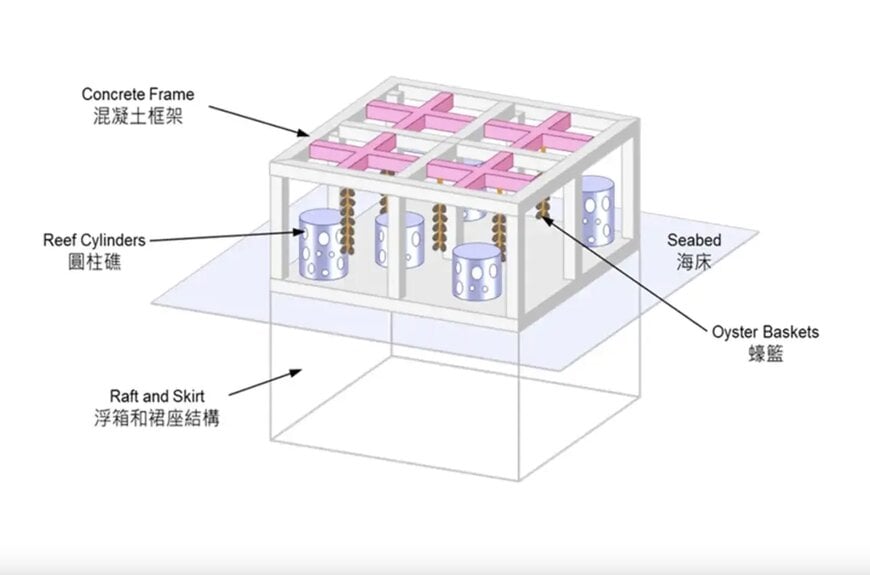
- Type I reefs combine concrete modules, oyster baskets, and reef cylinders to create structurally diverse habitats. Rough surfaces accelerate colonisation by sessile organisms such as corals and anemones, while cavities provide shelter for fish.
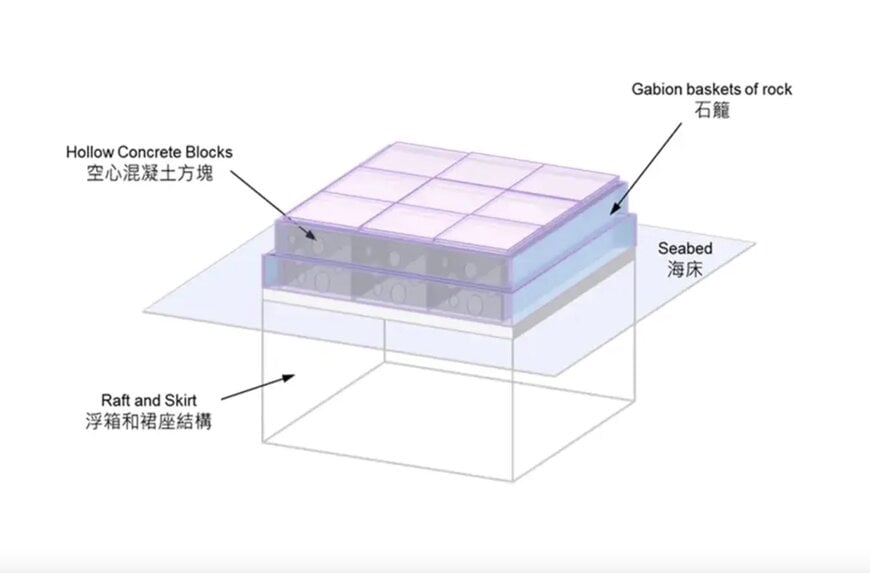
- Type II reefs use gabion baskets filled with quarry rock, offering stable surfaces for benthic species and creating spawning and nursery habitats.
Innovative raft and skirt foundation designs allow installation on soft seabeds without extensive ground preparation, reducing cost and environmental impact.
Post-deployment monitoring confirms that these structures support increasing biodiversity and fish abundance over time.
Expanding reef deployment in western waters near Hong Kong International Airport
In Hong Kong’s western waters, artificial reefs have also been installed near the airport’s Centre Runway in collaboration with the Airport Authority Hong Kong. Approximately 500 reef units were deployed to simulate natural coral reef complexity.
These structures feature:
Post-deployment monitoring confirms that these structures support increasing biodiversity and fish abundance over time.
Design of artificial reef type I
Design of artificial reef type II
In Hong Kong’s western waters, artificial reefs have also been installed near the airport’s Centre Runway in collaboration with the Airport Authority Hong Kong. Approximately 500 reef units were deployed to simulate natural coral reef complexity.
These structures feature:
- Rough concrete surfaces to promote organism attachment
- Openings of varying sizes to support different fish species
- Configurations that provide shelter, feeding grounds, and migration pathways
To complement habitat creation, 60,000 fish fry were released in 2025 to accelerate population recovery and strengthen ecosystem resilience.
Engineering-driven ecosystem restoration
Across Hong Kong, more than 600 artificial reef units—totalling around 180,000 cubic metres—have been deployed in marine parks, fish spawning grounds, and aquaculture zones. These projects demonstrate how engineering and ecological science can be combined to restore marine habitats.
Artificial reefs function as long-term infrastructure for biodiversity, supporting:
Engineering-driven ecosystem restoration
Across Hong Kong, more than 600 artificial reef units—totalling around 180,000 cubic metres—have been deployed in marine parks, fish spawning grounds, and aquaculture zones. These projects demonstrate how engineering and ecological science can be combined to restore marine habitats.
Artificial reefs function as long-term infrastructure for biodiversity, supporting:
- kiHabitat complexity for diverse marine species
- Recovery of fish populations and spawning grounds
- Improved resilience of coastal ecosystems
- Integrating ecology into infrastructure planning
The development of artificial reefs reflects a broader shift toward integrating environmental considerations into infrastructure projects. By aligning engineering design with ecological objectives, such initiatives contribute to sustainable marine resource management.
Edited by Romila DSilva, Induportals Editor, with AI assistance.
Edited by Romila DSilva, Induportals Editor, with AI assistance.
