
www.industry-asia-pacific.com
31
'26
Written on Modified on
MOL and Hitachi to Develop Innovative Floating Data Centers Using Ships
The companies signed a memorandum to repurpose second-hand vessels into mobile, water-cooled data centers, aiming for commercial operations in Japan and overseas by 2027.
www.hitachi.com
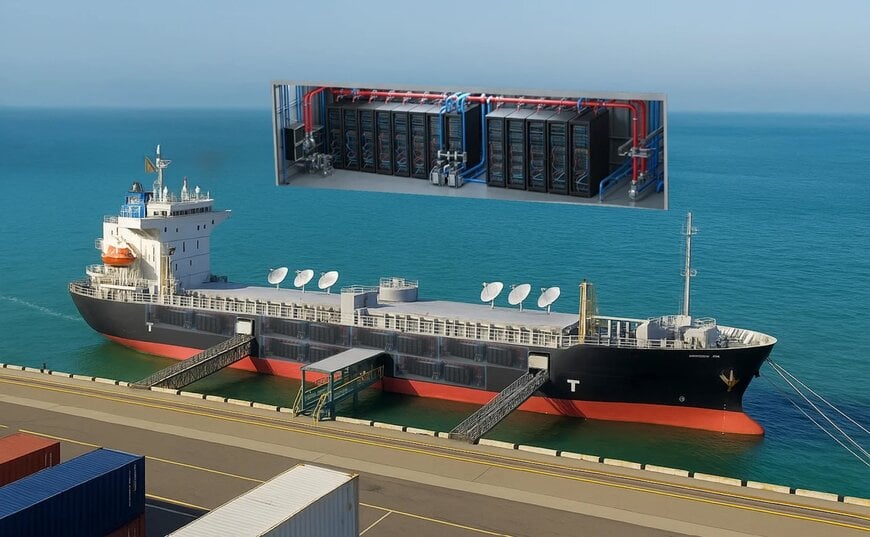
The rapid expansion of generative AI has created an urgent global need for data processing power, yet traditional land-based data centers increasingly face hurdles such as land scarcity, high construction costs, and environmental opposition. A new partnership between Mitsui O.S.K. Lines (MOL), Hitachi, Ltd., and Hitachi Systems, Ltd. seeks to bypass these terrestrial limitations by converting second-hand vessels into "Floating Data Centers" (FDCs). This maritime approach offers a more agile, cost-effective, and environmentally sustainable alternative to the stagnant development cycles of conventional infrastructure.
A Faster Path to Deployment and Scalability
One of the primary advantages of a vessel-based data center over its land-based counterparts is the significantly reduced timeline for operational readiness. While a traditional facility can take several years to move from land acquisition to completion, the renovation of an existing ship hull into a functional FDC is estimated to take approximately one year. By repurposing car carriers or similar vessels, which can offer up to 54,000 square meters of floor space, the project can rival the capacity of the world's largest onshore facilities without the need for complex land-use permits or the massive initial investment required for new construction.
Solving the Resource and Cooling Crisis
As high-performance AI servers generate levels of heat that standard air-cooling systems struggle to manage, the industry is shifting toward water-cooling. On land, this often leads to conflicts with local communities over the consumption of potable water. The FDC model eliminates this friction by utilizing the surrounding seawater or river water for cooling. This provides a virtually limitless thermal sink that reduces both power consumption and operational costs. Furthermore, because these units are buoyant, they can be relocated to meet shifting regional demand, providing a level of geographical flexibility that permanent land-based buildings cannot match.
Strategic Collaboration and Global Feasibility
The commercialization of this technology relies on a distinct division of maritime and digital expertise. MOL leads the vessel conversion process, managing the engineering of ship hulls, port authority negotiations, and the complex financing structures required for maritime assets. Simultaneously, the Hitachi Group leverages its "HMAX by Hitachi" AI solutions and extensive experience in operating containerized and land-based data centers to design the IT infrastructure, security, and networking requirements. The initial feasibility studies focus on Japan, Malaysia, and the United States, targeting markets where land and resource constraints are most likely to stall traditional digital growth.
Environmental Sustainability Through Reuse
Beyond the logistical benefits, the conversion of second-hand vessels serves as a model for industrial recycling. Reusing existing hulls and onboard systems—such as water intake and power generation—drastically reduces the carbon footprint associated with extracting and processing new raw materials. By transforming retired maritime assets into cutting-edge digital hubs, this initiative addresses the dual challenge of meeting the world's computational demands while adhering to stricter environmental regulations and sustainability goals. Operations for these mobile data hubs are projected to commence in 2027 or later, marking a significant shift in how global digital infrastructure is conceived and deployed.
Edited by Evgeny Churilov, Induportals Media - Adapted by AI.
www.hitachi.com
