
www.industry-asia-pacific.com
24
'26
Written on Modified on
Siemens Expands Industrial AI System with New Technologies in Beijing
New cloud simulation, automation, and AI infrastructure technologies support scalable industrial AI deployment across manufacturing and data center environments.
www.siemens.com
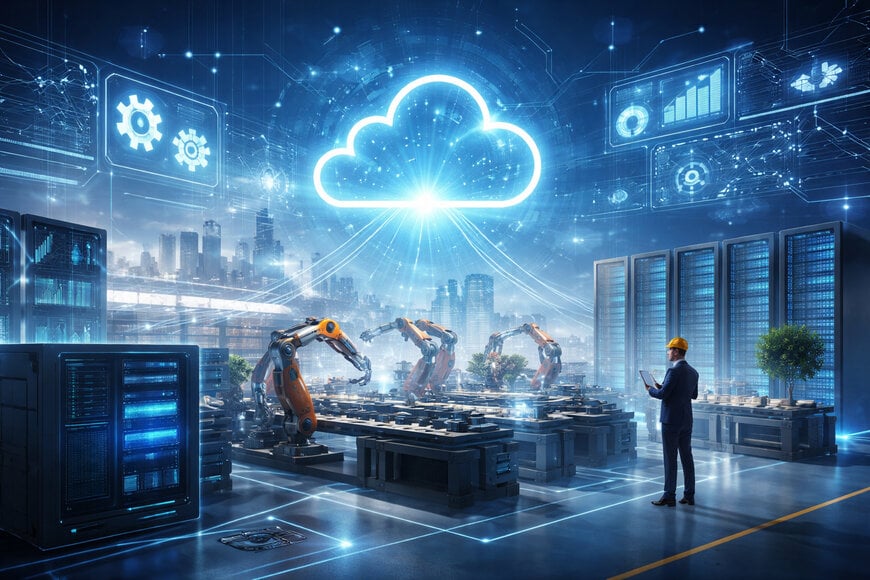
Industrial automation, smart manufacturing, and data center infrastructure are increasingly shaped by the integration of artificial intelligence into operational systems. Siemens AG has expanded its industrial AI ecosystem with new technologies and cloud partnerships aimed at enabling scalable, real-world deployment across industrial environments.
Expanded Cloud Partnership Enables Scalable Engineering Simulation
A key development is the strengthened collaboration between Siemens and Alibaba Cloud to deliver computer-aided engineering (CAE) capabilities via cloud infrastructure. By combining Siemens’ simulation software portfolio with Alibaba Cloud’s high-performance computing resources, the solution enables engineering teams to run complex simulations without relying on local infrastructure.
This approach supports Infrastructure-as-a-Service (IaaS) deployment models, allowing access to virtual simulation environments and scalable computing clusters. It also opens the possibility of integrating AI-driven capabilities, including large language models, into product lifecycle management workflows to support intelligent design and engineering processes.
New Technologies Support AI-Driven Industrial Infrastructure
To address the growing demands of AI infrastructure, Siemens introduced multiple technologies focused on industrial connectivity, power distribution, and system protection. These solutions are designed to support environments such as high-density data centers, where computing workloads require stable and efficient energy management.
Among these developments are direct-current (DC) circuit breakers designed to ensure reliable power distribution in data centers with increasing energy density. Additional infrastructure protection systems help maintain operational stability in environments running large-scale AI workloads.
AI-driven cooling technologies were also introduced to optimise thermal management in energy-intensive facilities. These systems continuously analyse operating conditions to improve cooling efficiency and reduce overall energy consumption, which is a critical factor in large-scale data center operations.
Edge and Automation Technologies Strengthen Shopfloor Execution
Siemens also introduced 26 new technologies spanning edge computing, automation, and industrial control systems. These developments aim to bridge the gap between AI-generated insights and real-time execution in manufacturing environments.
A new generation of programmable logic controllers (PLCs) provides increased processing performance and memory capacity, enabling faster and more complex coordination of production systems. These controllers function as the central control layer for industrial operations, managing machine interactions in real time.
Complementing this, advanced motion control solutions—including compact servo systems—translate digital instructions into precise mechanical movements. These technologies support applications requiring high accuracy while reducing system complexity and integration effort.
AI Applications Enhance Operational Efficiency and Maintenance
Beyond hardware, Siemens introduced AI-powered software applications designed to optimise industrial operations. Predictive maintenance solutions analyse data from critical assets to detect anomalies and prevent unplanned downtime, improving equipment reliability and lifecycle management.
These capabilities are part of a broader industrial AI framework that connects data, software, and hardware into a unified system. This architecture enables industries to move from data analysis to automated decision-making and execution within the same operational environment.
Industrial AI Moves Toward Scalable Deployment
The technologies were presented at the Siemens RXD Summit in Beijing, which brought together industry stakeholders to explore large-scale deployment of industrial AI across manufacturing, infrastructure, and supply chains.
Compared with traditional automation systems, which often operate in isolated layers, Siemens’ approach integrates cloud computing, edge processing, and AI-driven applications into a cohesive ecosystem. This enables more flexible and scalable deployment of intelligent systems across diverse industrial use cases.
By combining cloud-based simulation, advanced automation, and infrastructure technologies, Siemens’ expanded industrial AI platform reflects the transition from experimental AI applications to operational systems capable of supporting real-world industrial demands.
Edited by Natania Lyngdoh, Induportals Editor — Adapted by AI.
www.siemens.com
