
www.industry-asia-pacific.com
04
'26
Written on Modified on
Alfa Laval advances liquid air energy storage in South Korea
Alfa Laval and the Institute for Advanced Engineering collaborate to deliver cryogenic technology for South Korea's first large-scale liquid air facility, enhancing grid stability.
www.alfalaval.com
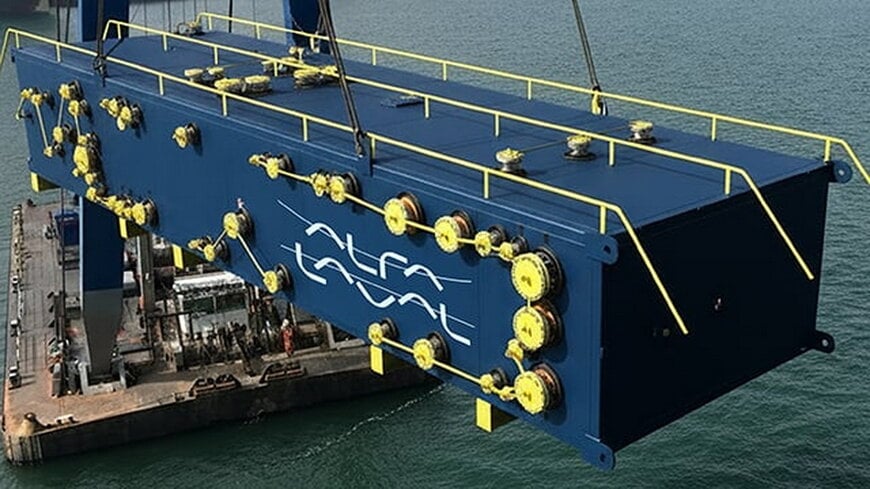
Liquid Air Energy Storage (LAES) is emerging as a critical alternative to traditional battery systems, offering a long-duration storage solution that is not limited by the geographical requirements of pumped hydro or the material constraints of lithium-ion batteries. A new strategic partnership between Alfa Laval and South Korea’s Institute for Advanced Engineering (IAE) aims to push the boundaries of this technology, focusing on high-performance cryogenic hardware to improve grid stability and renewable energy integration.
Overcoming the limitations of traditional storage
Unlike lithium-ion batteries, which face challenges regarding raw material scarcity, degradation over time, and recycling complexities, LAES utilizes air — an abundant and free resource. While competitors in the storage space often rely on systems with significant geographical footprints or chemical dependencies, LAES technology provides a compact and scalable solution that can be deployed in diverse environments, from urban centers to industrial zones.
Alfa Laval distinguishes its approach through specialized cryogenic equipment designed for extreme precision. By utilizing advanced brazed aluminum plate heat exchangers and multi-stage high-pressure cryogenic pumps, the system achieves higher thermal efficiency than standard shell-and-tube alternatives. These components are specifically engineered to manage the rapid pressure cycles and ultra-low temperatures required to liquefy air, ensuring a more reliable and maintenance-friendly operation compared to less specialized industrial cooling systems.
Enhancing efficiency through specialized cryogenic hardware
The collaborative project in South Korea involves the development of a facility capable of producing ten tons of liquid air daily. The process functions by cooling air to cryogenic temperatures until it reaches a liquid state, which is then stored in insulated tanks. When the electricity grid requires a discharge, the liquid air is pressurized, warmed, and expanded to drive turbines.
The differentiation in Alfa Laval’s technology lies in its ability to maximize energy recovery. By integrating high-efficiency heat transfer solutions, the system can capture and reuse the "cold energy" generated during the regasification process. This significantly improves the round-trip efficiency of the plant, addressing one of the primary historical drawbacks of liquid air technology and making it a more commercially viable competitor to other mechanical storage methods.
Strengthening grid resilience for a low-carbon transition
As South Korea accelerates its transition toward renewable energy, the ability to balance intermittent supply with peak demand becomes essential. This partnership establishes a domestic platform for large-scale LAES, positioning it as a backbone for the national energy infrastructure. By providing physical inertia to the grid — a feature software-managed batteries often lack — this technology offers a robust response to fluctuations, ensuring a steady and reliable power supply while supporting long-term decarbonization goals.
www.alfalaval.com
