
www.industry-asia-pacific.com
10
'26
Written on Modified on
Mitsubishi Electric Awarded Defense Satellite Communications System Contract
Mitsubishi Electric will develop a sophisticated geostationary satellite and ground systems for the Japan Ministry of Defense to ensure secure and stable national communications.
www.mitsubishielectric.com
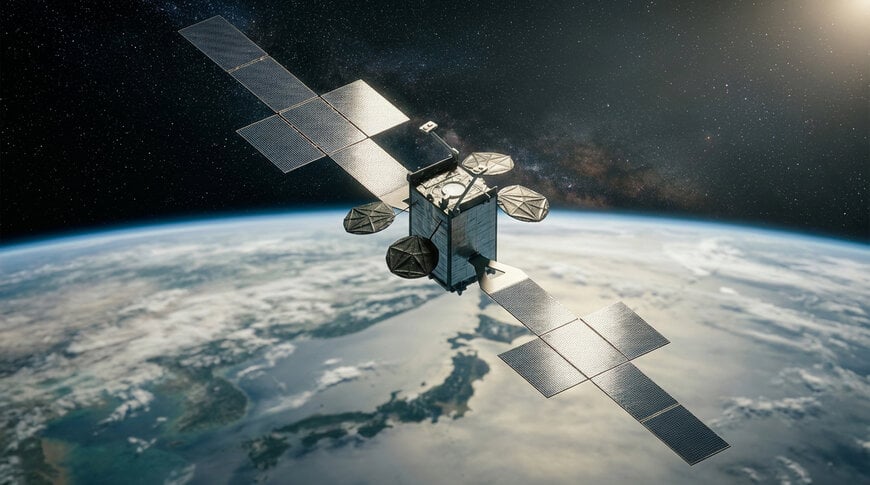
Mitsubishi Electric has been awarded a contract by the Japan Ministry of Defense to develop a next-generation defense communications satellite and its associated ground system. Scheduled for delivery by March 2030, this new infrastructure will succeed the current Kirameki-2 satellite. The primary differentiation of this system compared to existing X-band defense satellites lies in its significantly higher resistance to electronic interference and expanded communication capacity. While conventional systems often face bottlenecks during high-demand operations, this new platform leverages advanced geostationary technologies to ensure stable, secure, and high-volume data transmission even in contested environments.
Flexible Beam Management via Digital Payloads
A critical technological advancement in this project is the integration of a digital communications payload. Unlike traditional satellites with fixed coverage patterns, this next-generation satellite can flexibly alter its beam coverage areas and adjust communication capacity in real-time during operation. This capability allows the Japan Self-Defense Forces to dynamically redistribute bandwidth and focus connectivity on specific geographical regions as mission requirements evolve. This level of adaptability is a significant departure from older hardware-defined satellites, providing a more agile response to modern defense needs.
Integrated Ground and Space Infrastructure
The contract, valued at approximately 123.5 billion yen, encompasses not just the orbital asset but the complete design of the ground system. By developing the space and ground segments in tandem, Mitsubishi Electric ensures seamless end-to-end encryption and operational stability. This holistic approach addresses a common weakness in satellite communications where disparate ground and space technologies can create latency or security vulnerabilities. The resulting infrastructure is designed to serve as a robust foundation for Japan’s space domain defense, aligning with national guidelines to strengthen space-based operational foundations.
Miniaturization and Precision in Optical Links
Beyond the geostationary defense project, Mitsubishi Electric is simultaneously advancing the state of the art in optical (laser) space communications. Their latest innovations include the development of the world’s first optical receiver that integrates both laser communication and spatial acquisition into a single photodetector. This technology allows a terminal to sense the precise direction of an incoming laser beam—which is roughly one-thousandth the size of a radio wave—without needing a separate dedicated sensor. This integration reduces the size and weight of the terminal to less than one-fourth of previous models, making high-speed, 10-gigabit-class communication viable for smaller, more mobile satellite constellations.
www.mitsubishielectric.com
