
www.industry-asia-pacific.com
08
'26
Written on Modified on
Galana Kulalu Dam Partnership for Irrigation Infrastructure
Kenya’s National Irrigation Authority and China Communications Construction Company Kenya Ltd sign agreement to construct large-scale dam infrastructure to expand irrigation and water delivery systems.
farmlandgrab.org
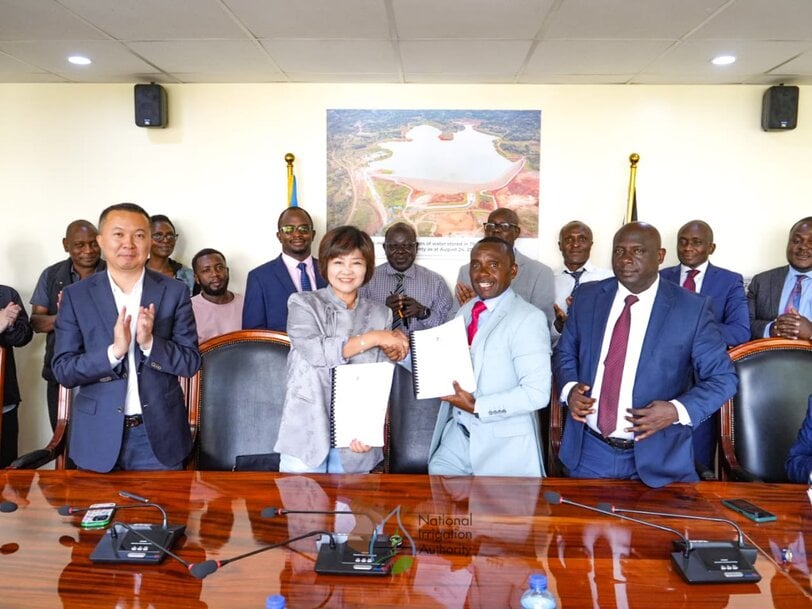
Kenya has finalized a 40-billion-shilling contract with China Communications Construction Company (CCCC) for the design, financing and construction of the Galana-Kulalu Dam, a pivotal infrastructure project intended to transform agricultural production and national food security. The agreement was formalised in Nairobi between the National Irrigation Authority (NIA) and the Chinese firm, marking a strategic shift from reliance on rainfall to dependable irrigation systems.
Purpose and Strategic Role in Agriculture
The Galana-Kulalu Dam is part of the broader Galana-Kulalu Food Security Project located across Tana River and Kilifi counties. Once completed, the reservoir will store approximately 305 million cubic metres of water and is expected to deliver around one billion cubic metres annually, enabling irrigation of up to 300,000 acres. This capacity is designed to support at least two cropping seasons per year, enhancing consistency in agricultural outputs and reducing dependence on erratic rainfall.
The project aligns with national policy objectives to stabilise food supplies, lower the cost of living, and shift Kenya’s agriculture toward large-scale, irrigation-based production. By facilitating year-round cultivation, the dam’s water availability is intended to stimulate agro-processing, encourage value-added agriculture, and create employment opportunities, especially for younger demographics.
Economic and Community Impacts
Beyond irrigation, the Galana-Kulalu Dam is expected to supply safe drinking water to an estimated 70,000 households in nearby communities. Reliable water access is anticipated to improve public health outcomes and support broader regional development. The availability of irrigation water is also projected to stabilise food prices by increasing domestic production, reducing imports and supporting export growth. These outcomes are part of efforts to expand Kenya’s agro-industrial base under existing economic transformation frameworks.
Comparison with Traditional Agricultural Practices
Unlike traditional rain-fed agriculture, which is vulnerable to climatic variability and drought, the dam-enabled irrigation model provides a predictable water supply that supports planned cultivation cycles. This structural change is positioned as a competitive advantage for Kenya’s agricultural sector by enabling higher productivity, reducing seasonal fluctuations in output, and facilitating investment in processing and value chain activities that are typically constrained by water scarcity.
Implementation and Future Outlook
With the contract signed, technical teams will begin groundwork, including detailed evaluation and preparation for full-scale construction and irrigation system development across the Galana-Kulalu ranch, a 1.75-million-acre area earmarked for agricultural transformation. The success of the dam and its associated irrigation network is expected to anchor Kenya’s long-term strategy for agricultural resilience and food security.
www.farmlandgrab.org
