
www.industry-asia-pacific.com
27
'26
Written on Modified on
How India Is Helping More People Access Renewable Power Through High-Voltage Transmission
India is investing in high-voltage direct current (HVDC) transmission, an advanced technology designed to move large amounts of electricity over long distances with less loss.
www.gevernova.com
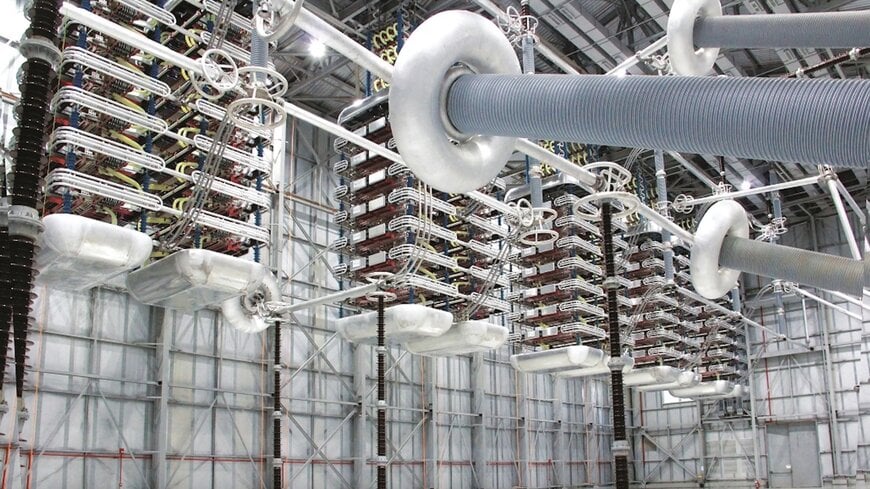
As India grows, so does the need to deliver reliable, affordable electricity to the people and businesses that depend on it every day. Gujarat, one of the country’s sunniest regions, is an ideal place to generate large-scale solar power. But many of the communities and major urban centers that need that energy most, including Mumbai, are hundreds of miles away. Without the right transmission infrastructure to move power efficiently across that distance, clean energy can be lost in transit, costs can rise, and renewable growth can slow.
To solve that challenge, India is investing in high-voltage direct current (HVDC) transmission, an advanced technology designed to move large amounts of electricity over long distances with less loss. In practical terms, that means more of the wind and solar power generated in remote areas can reach homes, businesses, and cities where demand is highest. According to Abhishek Srivastava, HVDC Portfolio director for GE Vernova’s Grid Systems Integration business in India, the country’s focus on transmission is so strong that the Ministry of Power now has dedicated divisions for both renewables and transmission — an indication that getting clean power to people is just as important as generating it.
Srivastava is part of a GE Vernova team supporting two HVDC projects that can help strengthen how power moves across India: the refurbishment of the existing 1,000-megawatt Chandrapur HVDC link, which connects to southern grid networks, and the new Khavda–South Olpad HVDC corridor, a 2.5-gigawatt line that will connect renewable generation in the west to the national grid. Together, these projects are designed to help more lower-carbon electricity reach the people, industries, and regions that need it.
The Solution: Moving Renewable Energy Where People Need It Most
Around the world, renewable energy is often generated far from the places where people live and work. Large solar and wind projects need space, which usually means remote deserts, plains, or coastal areas rather than dense cities. That creates a common challenge: how to move clean electricity efficiently from where it is produced to where it can improve daily life and support economic growth. HVDC has become one of the technologies helping bridge that gap.
HVDC is especially effective for transporting large amounts of power over long distances. It can reduce transmission losses, improve control across the grid, and in some cases require less land than comparable AC infrastructure. For India, that makes HVDC an important way to connect renewable energy zones to regional grids and population centers — similar to building a high-capacity expressway that helps electricity travel faster and more efficiently to the places that rely on it.
According to Srivastava, the value proposition of HVDC is easy to calculate. “There is the concept of the break-even distance. When, for example, the power is to be transferred over a long distance — and when we say ‘long distance’ we mean about 600 kilometers — the cost for DC automatically becomes more economical than AC solutions.” He adds that there are a bunch of nuts and bolts that add to HVDC’s value, too, as it requires fewer conductors, smaller towers, less steel, and ultimately less land area. He calls these indirect savings. And, he adds, the land issue is particularly important. “You have to secure rights-of-way. You have to buy or rent land. But HVDC requires less land, bringing costs down substantially.”
The Impact: Building Confidence in India’s Clean Energy Future
India entered the 21st century facing an economic imperative: finally delivering electricity to the millions of its citizens who still lacked basic access to power. Today, having largely solved that deficiency, the country is going from strength to strength in its aggressive electrification plan. On the back of HVDC — a true partner to faster renewables growth — the country is now reaching for the next tier of development as it seeks to infuse its existing system with affordable, lower-emissions power. For example, India has recently vaulted into third place in solar capacity, behind China and the U.S., and is looking to reach a total of 500 GW of non-fossil capacity by 2030. Srivastava says this target could grow further to over 900 GW just five years later, by 2035.
You might assume that during grid planning, figuring out generation comes first and addressing transmission needs comes second. Not so, according to Srivastava. There’s a mismatch, he explains, between renewables projects, which can come online quickly in one or two years, and HVDC projects, which can take four to five years. “The HVDC projects actually have to start in advance, before the generation is built. And unless developers can have good visibility of how the network will expand, they simply won’t make the investment for new generation.” So to keep the developers moving forward, there’s real pressure now on the government to maintain a steady pace of open bidding for new HVDC projects.
As India continues to expand lower-carbon power, transmission is becoming a critical part of making that growth meaningful for people. HVDC helps turn renewable generation into usable, reliable electricity that can support homes, businesses, and long-term economic development. For countries facing similar bottlenecks, India’s focus on transmission planning offers a clear lesson: building the clean energy future is not only about producing more power, but also about making sure it can reach the people who need it.
www.gevernova.com
