
www.industry-asia-pacific.com
09
'25
Written on Modified on
Trinasolar Advances C&I Rooftop Solar With TOPCon Modules
A 0.7 MW Qingdao project demonstrates how high-efficiency modules help industrial facilities overcome coastal constraints while improving annual energy yield and lowering operating costs.
www.trinasolar.com
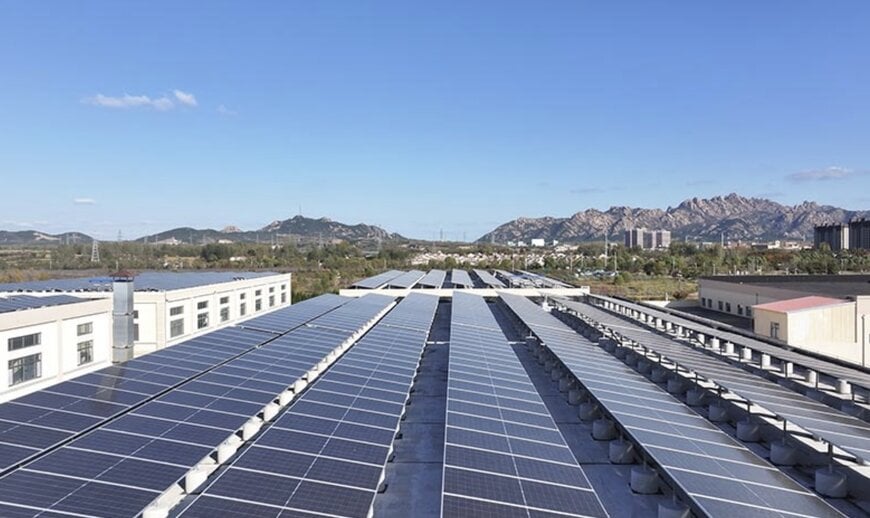
Commercial and industrial (C&I) facilities—especially those with high heat-processing loads such as pet food manufacturing—are increasingly adopting rooftop solar to control energy costs and meet stricter sustainability requirements. In this context, a 0.7 MW distributed PV installation at a pet food production plant in Qingdao, eastern China, has recently been connected to the grid using Trinasolar’s Vertex N 650W series modules.
Customer Problem: High Energy Demand in a Harsh Coastal Environment
Pet food production is an energy-intensive process in which electricity costs directly affect operating margins. The facility is also located in a coastal area exposed to strong ocean winds and rapidly changing weather, making structural robustness, stable energy yield and long-term reliability essential. Limited rooftop space added further constraints: the system needed to deliver maximum output without increasing the building load or compromising safety.
How the Solution Was Implemented
To address these operational and environmental challenges, the project deployed Trinasolar’s Vertex N 650W modules based on i-TOPCon Ultra technology. Their validated characteristics—high conversion efficiency, strong bifaciality, low degradation rates and reliable performance under low irradiance—are suited to variable coastal climates. The modules’ mechanical design supports durability under wind-prone conditions, meeting the engineering requirements for rooftop installations in exposed locations.
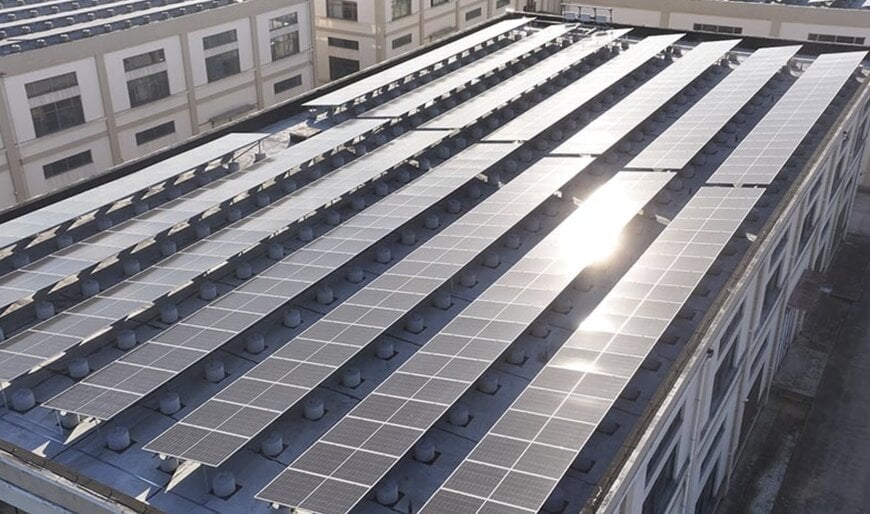
Added Value: Greater Energy Yield and Lower Operating Costs
The installation is expected to generate around 950,000 kWh of clean electricity annually, helping the manufacturer increase energy self-sufficiency while reducing electricity expenditure. The output corresponds to an estimated 273-ton reduction in carbon emissions per year, supporting long-term sustainability compliance.
For Trinasolar, the project demonstrates how TOPCon 2.0 modules can be applied across diverse commercial environments, including low-load rooftops, glare-sensitive zones, and sites with stringent safety or weather constraints. In this case, the combination of high efficiency and environmental resilience provided measurable gains in yearly energy yield and operational stability.
www.trinasolar.com
